

Both sales and sells are correct. They just do different jobs in a sentence. Sales is a noun. It talks about the money earned, the products sold, or the overall business performance of a company. Sells is a verb. It’s the third-person singular form of the base verb “sell,” used when one person or one company does the action.
So if you’re writing “Our sales grew last quarter,” that’s correct. If you’re writing “She sells handmade furniture,” that’s correct too. Mix them up, though, and your sentence stops making sense. Stick around, because we’re about to break down every situation where you’d reach for one word over the other.
Sales or Sells – Quick Answer

Here’s the short version if you’re in a rush. Use sales when you mean the noun: revenue, a sales report, or a sales team. Use sells when you mean the verb: someone selling something right now.
Think of it like this. Sales is the result. Sells is the action that gets you there.
A quick memory trick helps too. If you can replace the word with “runs,” “buys,” or “offers” and the sentence still works, you need sells. If the word feels more like a “thing” than an “action,” you need sales.
What Does “Sales” Mean?
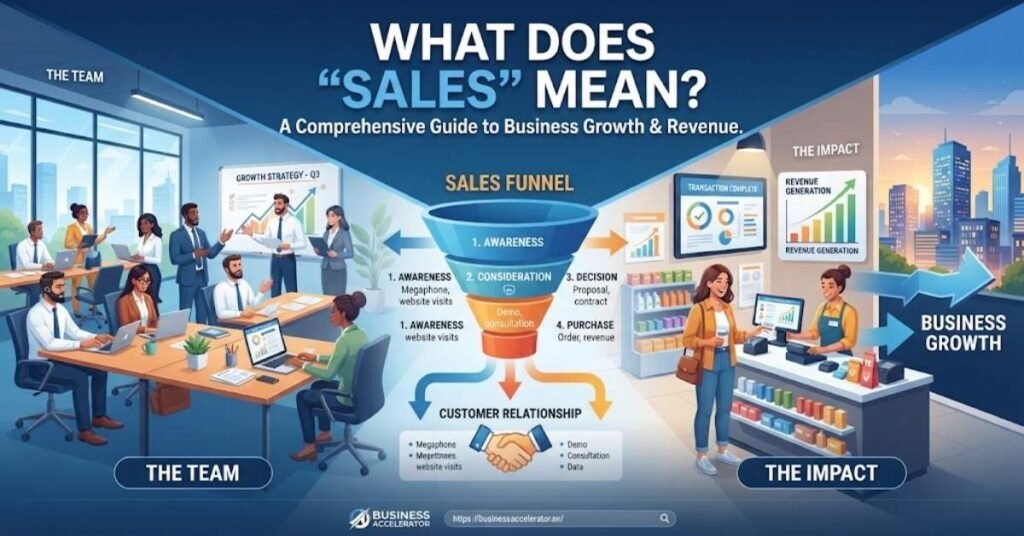
Sales is a plural noun that refers to transactions, revenue, or the department that handles them. It covers everything from a single sale to the total revenue a business brings in over a year. You’ll see it in phrases like sales growth, quarterly sales, and monthly sales.
It also refers to a group of people. A sales manager leads a sales team. Together, they build a sales strategy for the sales department.
Sales can describe a specific event too. Think holiday sales, discounts, and promotions that pull in customers. In every one of these cases, sales works as a noun, never as an action someone performs.
Common Uses of Sales
Sales shows up constantly in business writing and everyday English. Here are a few common ways you’ll spot it:
- Sales report: a document tracking performance over time
- Sales job: a role focused on selling products or services
- Total revenue: often used interchangeably with overall sales figures
- Sales events: promotional periods meant to boost purchases
Notice how none of these use sales as an action. It’s always describing something, not doing something.
What Does “Sells” Mean?
Sells is the verb form used with a singular subject, also called third-person singular. That means it pairs with words like “he,” “she,” “it,” or a single business name. For example, “The store sells phones” or “He sells cars for a living.”
This is where subject-verb agreement matters most. If your subject is one person or one entity, you need sells, not “sell.” Swap the subject to “they” and the verb changes: “They sell cars,” not “They sells cars.”
Sells describes an ongoing or repeated action. A company that sells software does it regularly, not just once. Someone who sells insurance for a living uses this word to describe their daily work.
The Origin of Sales or Sells

Both words trace back to the same root. They come from the Old English verb “sellan,” which meant to give, hand over, or deliver. Over centuries, that meaning shifted toward exchanging goods for money, which is how we use it today.
Sale, the singular noun, and sales, its plural form, developed alongside the verb. This shared word origin explains why they look and sound so similar. Understanding this bit of etymology makes the confusion between them feel a little less mysterious.
Language always evolves this way. One root word branches into a noun, a verb, and several related forms. That’s exactly what happened here, and it’s part of why English spelling can feel messy sometimes.
Why “Sales” and “Sells” Are Easy to Confuse
The confusion mostly comes down to how similar they look on the page. Both start with “sal” or “sel,” both relate to buying and selling, and both show up constantly in business writing. Your eyes can trick you into picking the wrong one, especially when typing fast.
There’s also a grammar layer to this. People sometimes forget that sales is a plural noun, not a verb at all. So they write “The company sales phones” when they actually mean “The company sells phones.”
Spellcheck tools don’t always catch this either. Since both words are spelled correctly on their own, a spellchecker won’t flag the wrong choice. That’s exactly why understanding the grammatical role of each word matters more than memorizing spelling.
British English vs American English Usage
Good news here: sales and sells work the same way in both British English and American English. There’s no regional spelling difference like you’d see with “colour” versus “color.” The grammar rules stay consistent no matter where your reader is from.
That said, usage habits can vary slightly. British business writing sometimes favors “sales figures,” while American writing leans toward “sales numbers” or “sales data.” Either version is correct, so don’t worry about which one is more “proper.”
The verb form stays identical too. Whether you’re writing for a UK audience or a US audience, “she sells” is always correct. Regional English differences here are more about word choice and style than actual grammar rules.
Which Word Should You Use?
Ask yourself one simple question: are you naming a thing, or describing an action? If it’s a thing, like revenue or a department, go with sales. If it’s an action someone is doing right now, go with sells.
Try this quick test before you hit publish. Read the sentence out loud and see if you’re talking about a result or a behavior. “Our sales doubled” describes a result. “She sells jewelry online” describes a behavior.
Still unsure? Check the subject of your sentence. Singular subject plus present tense action equals sells. Anything describing totals, teams, or trends equals sales.
Common Mistakes with Sales or Sells
Even experienced writers slip up here sometimes. Below are the most frequent errors people make, along with quick fixes.
- Sales used as a verb: “The store sales electronics” should be “The store sells electronics”
- Sells used as a noun: “Our sells went up” should be “Our sales went up”
- Subject-verb agreement errors: “They sells shoes” should be “They sell shoes”
- Confusing sale and sales: “A big sale” is one event, while “strong sales” refers to overall revenue
These aren’t just small nitpicks. Grammar mistakes like these can make business writing look careless, especially in emails or reports sent to clients. A little attention here goes a long way toward sounding polished.
Sales or Sells in Everyday Examples
Seeing these words in real contexts makes the difference click faster than any rule ever could. Let’s walk through a few places you’ll run into sales and sells all the time.
Emails
Business emails use both words constantly, often in the same message. “Our sales team wants to discuss the deal, and I know your company sells premium equipment.” Getting this right keeps your emails looking sharp and professional.
A misused word in a client email can feel small, but it adds up. Readers notice patterns, even subconsciously. Clean grammar builds trust before you’ve even made your pitch.
News
News articles report on both business performance and company actions. “Holiday sales rose by twelve percent this year” is a typical headline. “The retailer now sells its products directly through an app” describes a specific move a company made.
Journalists rely on precision. One wrong word can shift the entire meaning of a sentence. That’s part of why professional writing treats this distinction seriously.
Social Media
Social media posts tend to be casual, but the grammar rule still applies. “This brand sells out every product in under an hour!” is a common type of post. “Our sales hit a new record this month, thanks to you all” is another.
Even short captions benefit from getting this right. It’s a small detail, but it signals that the person behind the account knows their craft.
Formal Writing
Formal writing, like business reports and academic papers, holds this rule to an even higher standard. “The sales department reported a fifteen percent increase in quarterly sales.” “The company sells its services across twelve countries.”
In formal writing, precision matters more than ever. A grammar slip here can undercut the credibility of an entire report.
Comparison Table: Sales vs Sells
| Feature | Sales | Sells |
| Part of speech | Noun | Verb |
| Form | Plural | Third-person singular |
| Describes | Revenue, department, or results | An action someone performs |
| Example | “Sales increased this quarter.” | “She sells insurance.” |
| Common pairing | Team, report, strategy, growth | He, she, it, the company |
This table sums up the entire debate in one glance. Whenever you’re stuck, come back to this and check which column fits your sentence.
Special Case: “Sales” as an Adjective
Here’s a twist most people miss. Sales can also work as an adjective, modifying another noun. Think “sales report,” “sales manager,” or “sales strategy.”
In this role, sales describes what type of thing you’re talking about. It’s not acting as a plural noun counting transactions anymore. It’s simply labeling the noun that follows it.
This use trips up even careful writers. Just remember that as long as sales sits before another noun and describes it, it’s doing adjective duty, not noun duty. The spelling never changes, only the job it’s doing in the sentence.
Sales or Sells – Usage Trends
Search data shows that people search for “sales or sells” year round, but spikes happen around quarterly earnings season and holiday shopping periods. Business professionals, students, and content writers all search this phrase for slightly different reasons. Some want a quick grammar check, while others are researching for a sales report or blog post.
Usage trends also show that “sells” gets searched more by online sellers describing their own products. Think product listings where someone writes “This shop sells clothing” or “This page sells phones fast.” Meanwhile, “sales” dominates searches tied to business performance and revenue tracking.
This tells us something useful. Everyday English speakers usually know the difference intuitively when speaking. The confusion shows up mostly in writing, especially under time pressure.
Sales or Sells for Online Sellers
If you run an online store, this distinction shows up in your product listings daily. “This sells fast” works great as a selling point on a product page. “Check out our latest sales” works better as a banner announcing a discount.
Getting this right isn’t just about grammar. It affects how professional and trustworthy your store looks to new customers. Clear, correct copy builds professionalism and trust before a buyer even adds something to their cart.
Quick Grammar Recap
Let’s tie the grammar pieces together in one place. Sales is always a noun, whether it’s naming revenue or acting as an adjective before another noun. Sells is always a verb, paired with a singular subject in the present tense.
Remember the swap test too. Replace the word with “runs” or “offers.” If it still makes sense, you need sells.
Conclusion
Sales and sells look alike, but they play completely different roles in a sentence. Sales names something: revenue, a team, a report, or a trend. Sells describes an action: one person or one company selling something right now.Once you spot the pattern, the choice becomes automatic. Ask whether you’re naming a thing or describing an action, and the right word follows naturally.
Bookmark this guide, and you’ll never second guess yourself again.Got a sentence you’re unsure about? Drop it in the comments below, and let’s figure it out together. Found this helpful? Share it with a coworker or friend who could use the refresher too.
FAQs
Is sales a verb?
No, sales is a noun. It never functions as an action word on its own.
Is sells a noun?
No, sells is a verb. It describes the action of selling, done by a singular subject.
Is sells plural?
No, sells is singular in form, even though it sounds similar to plural nouns. It pairs only with singular subjects like “he,” “she,” or “it.”
Can sales be singular?
Sales is grammatically plural, but it’s often treated as a single concept, like “sales are strong” versus “sales is strong.” Most style guides prefer treating it as plural.
What’s the difference between sale and sales?
Sale refers to one single transaction or discount event. Sales refers to the bigger picture: total revenue or repeated transactions over time.
Which is correct, sell or sells?
It depends on your subject. Use “sell” with plural subjects like “they” or “we,” and use sells with singular subjects like “he,” “she,” or “it.”

Muaz is a language enthusiast and content writer at Businessleam, creating clear, helpful articles about words, meanings, grammar, phrases, and modern English.