
You have heard someone shout giddy up and wondered what it actually means outside of old western movies. The short answer is that it means “get moving” or “let’s go,” and people use it far beyond horseback riding today.This phrase started as a horse riding command, something a rider would call out to make a horse move forward or go faster.
Over time, it wandered into everyday speech, texting, memes, and even office chatter, picking up a playful, upbeat tone along the way.By the end of this guide, you will know exactly where the phrase came from, how people use it now, and where it fits (and does not fit) in your own conversations. Let’s dig in.
Giddy Up Meaning and Definition
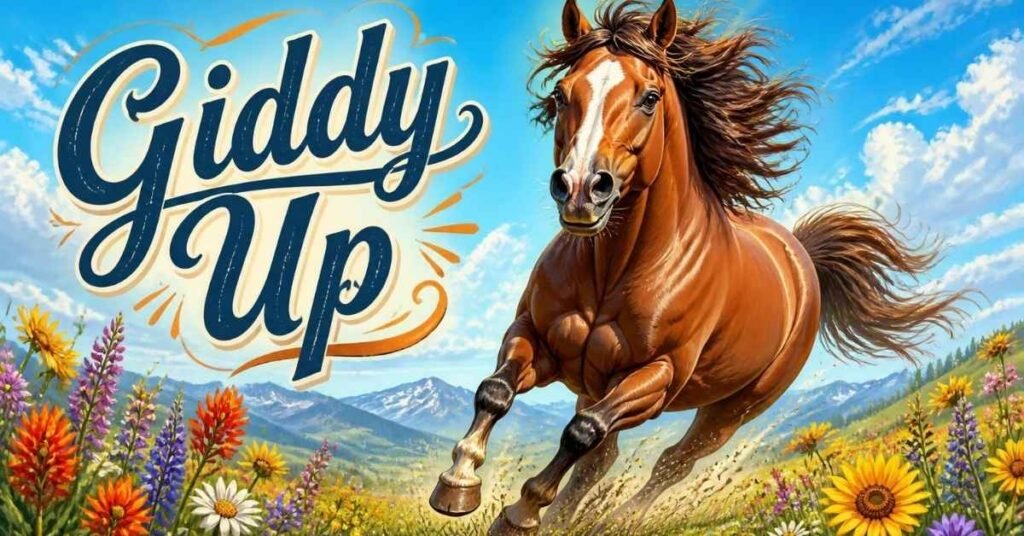
At its core, giddy up meaning boils down to one simple idea: get going, right now. It’s a call to take action, usually delivered with a bit of energy or enthusiasm behind it.
The literal meaning points straight to horseback riding. Horse riders say it to a horse to signal that it’s time to move forward, speed up, or start walking. It’s short, punchy, and easy for a horse (or a person) to respond to instantly.
But the figurative meaning is where things get interesting. People now use it as a general motivational phrase, something you’d say to a friend who’s stalling, a coworker who needs a nudge, or even yourself before tackling a task. It carries a friendly encouragement vibe rather than a strict order.
Meaning Comparison Table
Here’s a quick side-by-side look at how the phrase shifts depending on context.
| Context | What It Means | Example |
| Literal (horses) | Command to move or speed up | A rider calls “giddy up” to start trotting |
| Figurative (daily life) | Encouragement to get moving | “Giddy up, we’re late for the movie” |
| Workplace | Push to start or finish a task | “Giddy up, the deadline’s in an hour” |
| Texting/social media | Casual hype or excitement | “Giddy up! Concert night!” |
This table shows why context matters so much. The same two words can sound like a command, a joke, or pure hype, depending on who’s saying it and why.
The Origin and History of Giddy Up
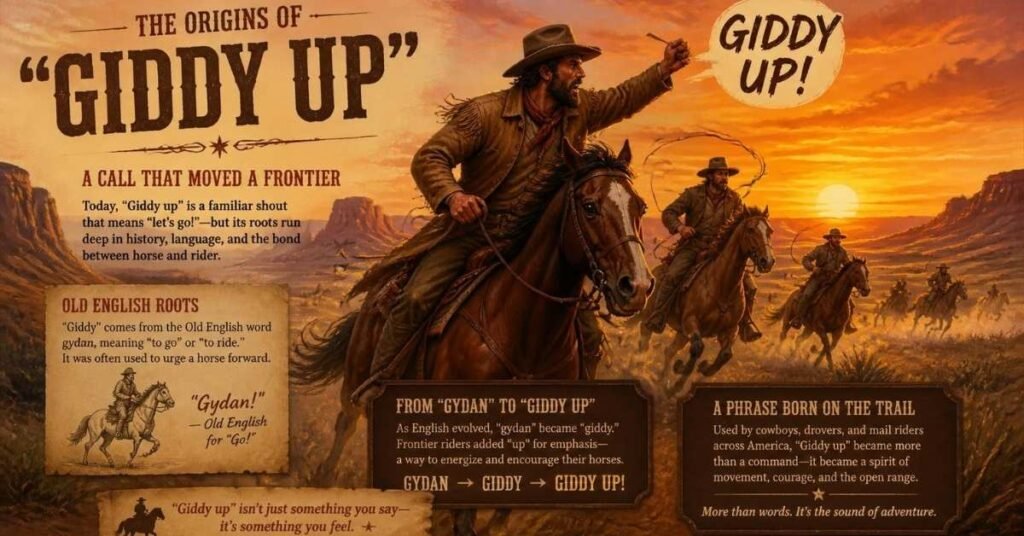
The phrase traces back to cowboy culture and ranching communities, where ranch workers and rodeo performers relied on horseback transportation daily. Calling out riding commands was standard practice, and giddy up became one of the most recognizable ones.
Linguists tracing the phrase origin generally connect it to older English interjections used to prompt animals, blended over generations into the version we know today. It’s less about one inventor and more about language evolution shaped by English-speaking communities who worked closely with horses.
Western films, country music, and old television shows helped push the phrase into mainstream culture. Once Hollywood started putting cowboys on screen, giddy up stopped being a farm term and became part of everyday English vocabulary, recognized even by people who’ve never been near a horse.
Why People Say Giddy Up Today
People still say it because it just works. It’s short, it’s fun to say, and it instantly signals energy without sounding harsh or bossy. That’s rare for a command.
It also fits naturally into casual conversation. Nobody flinches when you say it to a friend or sibling, because it carries a playful tone rather than an aggressive one. Compare that to barking “hurry up,” which can land as impatient or even rude.
There’s also nostalgia at play. Many people grew up watching cowboys on screen or hearing grandparents use old-school phrases, so giddy up feels comforting and familiar, even funny, when dropped into a modern text or meeting.
Practical Uses of Giddy Up in Everyday Life
This phrase shows up in more corners of daily life than most people realize. Below are the main ways it gets used, each with its own flavor and intent.
Encouraging Someone to Get Moving
This is the most direct, classic use. You say it when someone’s dragging their feet and you need them to start moving, whether that’s leaving the house or finishing breakfast.
- “Giddy up, the bus leaves in five minutes.”
- “Giddy up, kids, school starts soon.”
Motivating a Team
In a workplace culture that leans casual, team leaders and managers sometimes use it to spark team motivation without sounding like a drill sergeant. It softens the push behind a deadline.
- “Giddy up, team, let’s wrap this presentation before lunch.”
- A coach might yell it during practice to boost energy before a drill.
Expressing Excitement
Sometimes it has nothing to do with urgency. It’s just pure excitement and enthusiasm, like a verbal fist pump before something fun happens.
- “Giddy up! Concert tickets just dropped.”
- “Giddy up, road trip weekend is finally here.”
Adding Humor to a Conversation
Because of its cowboy roots, saying giddy up in a totally unrelated situation, like grabbing coffee, often gets a laugh. It adds a bit of humor in conversation without trying too hard.
- “Giddy up, we’ve got a food truck to hit before it closes.”
- Friends often say it sarcastically when someone’s overly slow getting ready.
Giddy Up in Texting and Social Media
Texting and social media captions have given this old phrase a second life. It fits perfectly into short, punchy digital conversations where tone needs to come through fast.
People drop it into group chats, gaming chat, and comment sections as a quick hype word. It works well in memes too, often paired with a cowboy image or a horse gif for comic effect, turning an old internet expression into something fresh again.
Text Message Examples
- “Giddy up, we’re leaving in 10 🐎”
- “New season just dropped, giddy up 🔥”
- “Giddy up fam, game night’s on”
Examples of Giddy Up in Everyday Conversation
Context shapes tone more than the words themselves. Here’s how the phrase plays out across different relationships and settings.
Family
A parent might say, “Giddy up, breakfast is getting cold,” turning a mundane morning request into something lighter and less naggy.
Workplace
In business meetings, someone might toss in “Giddy up, let’s move to the next slide” to keep energy up without sounding stiff or overly formal.
School
A teacher could say it to get students moving between activities, especially younger kids who respond well to playful language.
Friends
Among friends, it often shows up as a joke, like “Giddy up, you’ve been picking an outfit for an hour.”
Sports
Sports commentary sometimes borrows it during a game, especially when describing a burst of speed or a comeback push.
Travel
Before a road trip or flight, someone might say, “Giddy up, adventure awaits,” setting a fun, adventurous mood for the trip ahead.
Similar Words and Related Phrases
English has plenty of related phrases that carry a similar push toward action. Some of the most common ones include let’s go, hurry up, come on, time to roll, step on it, let’s get started, and off we go.
Each of these leans on the same core idea, get moving, but they differ slightly in tone. Some feel urgent, some feel casual, and some feel almost cheerful. Knowing the difference helps you pick the right one for the moment.
Giddy Up Compared With Similar Expressions
Let’s break down how giddy up stacks up against its closest cousins in everyday English.
Giddy Up vs Let’s Go
“Let’s go” is more neutral and works in nearly any setting, formal or casual. Giddy up carries more personality and a distinctly playful edge, better suited for relaxed settings.
Giddy Up vs Hurry Up
“Hurry up” can sound sharp or even irritated, especially in a sarcastic tone. Giddy up softens that same message, making it feel more like a friendly nudge than a scold.
Giddy Up vs Come On
“Come on” often expresses mild frustration or disbelief, like reacting to bad news. Giddy up, by contrast, stays firmly rooted in encouragement and forward motion.
Common Mistakes People Make
Even a fun, simple phrase like this one trips people up sometimes. Here are the slip ups worth knowing about.
Thinking It Only Refers to Horses
Plenty of people assume it’s strictly a horse term and feel odd using it otherwise. In reality, its modern conversational use has fully detached from horseback riding for most speakers.
Using It in Very Formal Settings
Dropping “giddy up” into legal documents, professional reports, or academic writing would look wildly out of place. Save it for casual speech, not formal correspondence.
Confusing It With Being Giddy
Giddy (adjective) describes feeling dizzy, lightheaded, or overly excited, which is a completely different word from the phrase giddy up. They sound alike but mean very different things.
Using It Too Often
Like any catchy phrase, repeating it constantly drains its charm. Save it for moments where a little cheerful expression actually adds value.
Assuming It Is Rude
Because it functions as a command, some people worry it sounds bossy. In truth, its friendly tone and playful roots make it one of the least rude ways to push someone along.
Where Giddy Up Fits in Modern Pop Culture
Beyond cowboy movies, the phrase pops up in advertising, catchy jingles, and even country music lyrics that lean into nostalgia. Brands use it to signal fun, fast, no-nonsense energy without sounding pushy.
Streaming shows set in rural or western towns keep the phrase alive for new generations. Even entertainment aimed at kids borrows it, since it’s short, easy to remember, and instantly recognizable.
How Tone Changes the Meaning of Giddy Up
The exact same phrase can shift from sweet to sarcastic depending on delivery. Said with a smile, it reads as friendly encouragement. Said flatly or with an eye roll, it leans sarcastic or even mildly impatient.
This flexibility is part of why the phrase has survived so long. It adapts to tone of voice and situational meaning, making it one of the more versatile pieces of everyday English still in active use.
Conclusion
Giddy up started as a simple horse riding command and grew into a flexible, friendly way to push people toward action. Whether you’re texting a friend, motivating a team, or just having fun, it fits right in.
Next time someone drags their feet, skip the flat “hurry up” and try something with a bit more personality. Drop a giddy up, and watch the room lighten up a little. Got a favorite way you use this phrase? Share it in the comments below, we’d love to hear it.
FAQs
What does giddy up mean?
It means “get moving” or “let’s go.” Originally a horse riding command, it’s now a general motivational phrase used in everyday speech.
Is giddy up considered slang?
It sits closer to an informal expression than true slang. It’s widely understood and appears in casual writing, texting, and speech across generations.
Can you use giddy up in a text message?
Yes, it works great in texting and social media posts. It adds energy and a light, fun tone to short messages.
Is giddy up polite?
Generally yes. Its friendly communication style makes it feel encouraging rather than demanding, unlike sharper phrases like “hurry up.”
Where did the phrase giddy up come from?
It comes from cowboy culture and ranching, where horse riders used it as a riding command to get a horse moving.
What is another way to say giddy up?
Similar options include let’s go, step on it, come on, and off we go, each with a slightly different tone.
Can giddy up be used at work?
In relaxed, informal offices, yes. In more traditional workplace communication or formal settings, it’s better to stick with neutral phrasing.

Muaz is a language enthusiast and content writer at Businessleam, creating clear, helpful articles about words, meanings, grammar, phrases, and modern English.