
You’ve heard someone say it a hundred times. Maybe you’ve said it yourself right after slipping back into a routine you swore you’d quit. Old habits die hard simply means that long-standing habits are tough to change, even when you genuinely want to change them.This isn’t just a catchy line. It’s one of the most relatable idiomatic expressions in English because it puts words to something everyone feels.
You try to wake up earlier, eat better, stop checking your phone every five minutes, and somehow your automatic behaviors pull you right back to where you started.By the end of this guide, you’ll know exactly what the phrase means, where it came from, how to use it the right way, and why it still shows up in conversations, movies, and workplace chats decades after it became popular.
Meaning at a Glance

If you’re in a rush, here’s the short version. Old habits die hard points to established habits and repeated behaviors that stick around no matter how hard someone tries to break them. It’s used when a person keeps doing something familiar, even after deciding to stop.
This idiom applies to good and bad routines alike. Someone might still call their mom every Sunday out of habit, and someone else might still bite their nails during stressful meetings. Both situations fit the phrase.
People reach for this saying because it captures a very human struggle. Change sounds simple on paper. Actually pulling it off? That’s where habit change gets messy.
What Does Old Habits Die Hard Mean?
Simple Definition
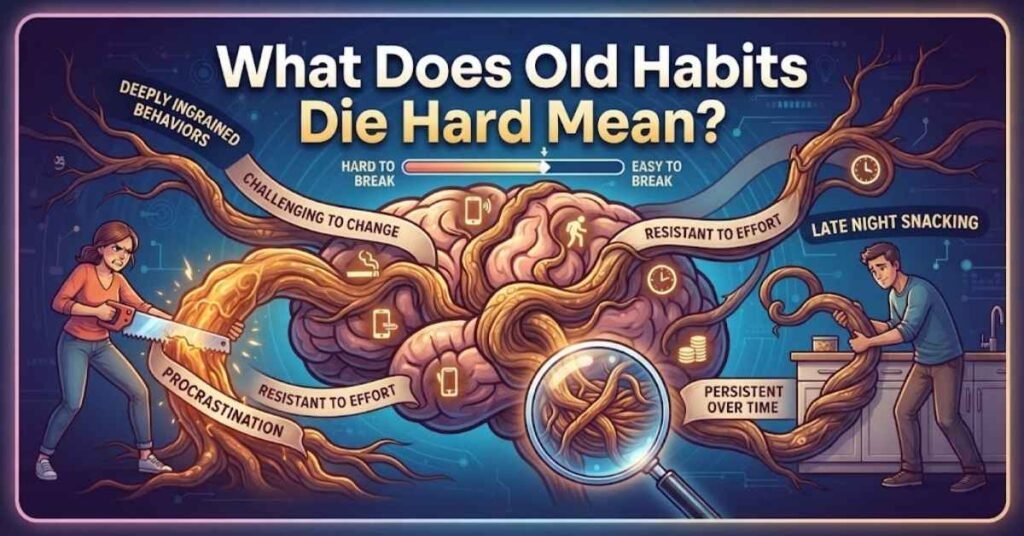
At its core, this idiom definition describes behaviors that resist change because they’ve been repeated so many times they feel automatic. Think of daily routines you don’t even think about anymore, like grabbing your keys before leaving the house or checking your email the second you wake up.
These familiar routines get wired into your brain through repetition. That’s why quitting them takes more than good intentions. It takes consistent effort over time, and even then, slip ups happen.
The phrase works as a gentle explanation, not an excuse. It says, “yes, this is hard, and that’s completely normal.”
What Does the Idiom Suggest?
Beyond the literal words, this expression suggests something deeper about human psychology. It hints that our brains prefer familiar patterns because they require less mental energy. Doing something new demands focus, while doing something old runs almost on autopilot.
It also suggests patience matters more than willpower alone. People who successfully shift their behavioral patterns usually don’t rely on sheer force. They rely on small, steady steps that respect how habits actually form.
So when someone says this phrase, they’re not just complaining. They’re acknowledging a real pattern in human behavior that psychologists have studied for years.
Where Did the Phrase Come From?
The origin of old habits die hard traces back further than most people expect. Variations of this idea appeared in English writing as early as the 1700s, though the exact modern wording became common in the 19th century.
Early versions showed up in English literature, letters, and even political speeches, where writers described how tough it was to shake off traditional customs or outdated systems. Over time, the phrase got shortened and simplified into the version everyone uses today.
Its staying power comes from how universally true it feels. Whether you’re reading a newspaper column from decades ago or scrolling social media today, the sentiment hasn’t aged a day. That’s rare for any traditional English expression, and it’s part of what makes this one so enduring.
How to Use Old Habits Die Hard Correctly
In Everyday Conversation
This phrase fits naturally into casual presentations and chats with friends. Say your friend keeps setting five alarms even though they always wake up on the first one. You could laugh and say, “old habits die hard, huh?”
It works best when there’s a light, understanding tone behind it. Nobody uses this idiom to criticize. It’s more of a shared nod, an acknowledgment that we’re all a little stuck in our ways sometimes.
Keep it conversational. This isn’t a phrase for stiff, formal explanations. It shines in natural conversation where people relate to each other’s quirks.
At Work
In workplace communication, this idiom often comes up during organizational changes. Maybe your company switched to new software, but half the team still emails files instead of using the shared drive. Someone might sigh and say, “old habits die hard around here.”
It’s a handy way to describe resistance to new processes without sounding harsh. Managers sometimes use it when explaining why training takes longer than expected, especially with old systems that employees have used for years.
Used well, it builds a bit of empathy into tough conversations about change. It says, “I get it, this is hard,” instead of placing blame.
At School or College
Teachers and students both use this phrase when talking about learning habits. A student who still writes notes by hand instead of typing them, even after being told typing is faster, might explain, “old habits die hard, I just focus better this way.”
It also applies to teaching methods. An instructor who prefers a calculator and chalkboard over digital slides might use the same excuse, and honestly, it’s a fair one.
This idiom softens the conversation around outdated approaches without making anyone feel behind the times.
In Family Life
Family settings are full of moments where this idiom fits perfectly. Grandparents who insist on handwritten recipes over digital ones, parents who still print photos, or siblings who fight over the same TV remote every visit.
These small rituals show how family traditions hold on tight, even across generations. Saying “old habits die hard” during a family gathering usually gets a knowing laugh from everyone at the table.
It’s one of the warmer uses of this phrase, tied closely to nostalgia and comfort rather than frustration.
Practical Examples in Sentences
Seeing this idiom in action makes it easier to use naturally. Here are some real world style examples:
- “I told myself I’d stop snoozing my alarm, but old habits die hard.”
- “She’s tried three different planners, yet she still scribbles notes on sticky notes. Old habits die hard.”
- “Our office switched systems last year, but old habits die hard, so half the team still uses the old spreadsheet.”
- “He quit sugar for a month, then old habits die hard kicked in during the holidays.”
- “Even after moving cities, she still drives the long way home out of habit.”
Notice how each sentence pairs the idiom with a specific, relatable situation. That’s the trick to using it well. Context makes the phrase land.
Common Situations Where People Use This Idiom
Health and Fitness
This is probably the most common use case. People trying to build a healthy lifestyle often talk about how tough it is to stick with an exercise routine or improve eating habits. Cutting back on caffeine, drinking more water, fixing a messy sleeping schedule, these all involve fighting against unhealthy habits that feel comfortable.
Fitness coaches and wellness bloggers use this phrase constantly because it’s honest. Nobody transforms overnight, and pretending otherwise sets people up to feel like failures.
Technology
Digital habits are another big one. Some people still prefer physical calendars and paper notes over digital planners, even with smartphones doing everything automatically. Others cling to outdated workflows at work simply because they know them well.
This resistance isn’t about being technophobic. It’s about comfort. Learning a new app or system takes time nobody feels like spending when the old way still technically works.
Workplace Changes
Businesses go through constant shifts, from software upgrades to new business procedures. Employees who’ve used the same file organization system for a decade often struggle the most, not because they’re stubborn, but because muscle memory is powerful.
Leaders who understand this tend to roll out change more gently, giving people room to adjust instead of expecting instant adoption.
Family Traditions
Holiday traditions, greeting rituals, and weekly gatherings often stay exactly the same for years. Even when a family grows or moves, certain customs, like a specific dish at Thanksgiving or a particular way of saying goodbye, rarely disappear.
These traditions aren’t stubbornness. They’re comfort, identity, and connection all wrapped into one repeated action.
Personal Behaviour
Small personal quirks fall here too. Checking phone habits, biting nails during stress, taking the same driving route even when it’s not the fastest, these are all tiny examples of how deeply routines settle into our lives.
Similar Idioms and Related Phrases
English has plenty of cousins to this phrase. Here are a few worth knowing:
- You cannot teach an old dog new tricks – similar meaning, often used for older individuals resisting change.
- Creature of habit – describes someone who sticks rigidly to routines.
- Stuck in your ways – a more casual, sometimes critical version.
- Back to square one – used when someone reverts after trying to change.
- Falling back into habits – a direct, simple way to describe the same struggle.
Knowing these alternatives helps you avoid repeating the same idiom too often in writing or conversation.
Common Mistakes
Thinking It Means Change Is Impossible
This is the biggest misunderstanding. The phrase doesn’t claim habits can never change. It only says the process is difficult. Plenty of people successfully build positive habits through consistent effort and discipline, it just doesn’t happen instantly.
Using It for Brand New Behaviors
This idiom only applies to long-term behavior, not something someone just started. If a person tried a habit once and gave up the next day, that’s not really “old habits” territory yet. The phrase needs history behind it to make sense.
Using It in Formal Writing
While it’s perfect for blog writing, casual essays, or speech writing, it can feel out of place in strictly formal or academic documents. Save it for conversational or semi-formal content instead.
Confusing Habits With Personality
Habits are learned behaviors, not fixed personality traits. Someone who’s naturally quiet isn’t showing an “old habit,” they’re showing a trait. Mixing these two up weakens how clearly you communicate.
The Psychology Behind Why Habits Are So Hard to Break
There’s real science behind why this idiom rings true. Repeated actions carve neural pathways in the brain, making certain behaviors feel automatic rather than deliberate. This is often described through the habit loop, a cycle of cue, routine, and reward that strengthens every time it repeats.
Breaking this loop requires more than motivation alone. It requires awareness, self-control, and often replacing an old behavior with a new one rather than just removing it. That’s why replacing old habits tends to work better than simply trying to stop cold turkey.
Understanding this psychology takes the guilt out of struggling with change. It’s not weakness, it’s biology doing exactly what it evolved to do.
How to Actually Build New Habits Despite This Idiom
Knowing the phrase is one thing. Actually shifting your behavioral routines is another. A few approaches tend to work well across different situations:
- Start ridiculously small, since tiny wins build motivation faster than big overhauls.
- Attach new habits to existing routines, like stretching right after brushing your teeth.
- Track progress somewhere visible, whether that’s an app or a sticky note on the mirror.
- Expect setbacks, because behavioral transformation rarely moves in a straight line.
- Celebrate small wins, since positive reinforcement strengthens habit formation faster than criticism ever will.
None of these guarantee instant success, but they work with your brain’s wiring instead of against it.
Why the Idiom Remains Popular
This phrase hasn’t faded because it describes something timeless. Human nature hasn’t changed much, even as technology and lifestyles have transformed completely. People still crave comfort, still resist unfamiliar routines, and still relate instantly when someone says this line.
It also shows up everywhere, from business discussions to television shows and casual social media posts. That constant presence keeps it fresh in everyday vocabulary, even for English learners encountering it for the first time.
Its simplicity is its strength. You don’t need to explain it twice. Everyone gets it immediately, which is exactly why it’s lasted this long.
Conclusion
Old habits die hard captures something every single person understands, whether they’re trying to wake up earlier, eat healthier, or finally stop checking their phone at midnight. It’s not about failure. It’s about how deeply repetition and learning shape the way we act without even thinking.
The next time you catch yourself slipping into a familiar pattern, remember that change is still possible, it just takes patience and small, steady steps. And if someone teases you about falling back into old routines, you can smile and say exactly what they’re thinking, because sometimes, old habits really do die hard.
FAQs
What does old habits die hard mean?
It means long-standing habits are difficult to change, even when someone genuinely wants to break them.
Is old habits die hard an idiom?
Yes, it’s a well-known idiomatic expression used in everyday English conversation, writing, and media.
Can old habits die hard refer to good habits?
Absolutely. It can describe positive routines too, like someone who still exercises daily out of pure habit.
Is old habits die hard positive or negative?
It’s neutral. The tone depends entirely on the situation it’s describing, whether that’s a bad habit or a good one.
Where can I use old habits die hard?
You can use it in casual chats, workplace conversations, classroom discussions, blog posts, and even social media captions whenever routines or resistance to change come up naturally.

Muaz is a language enthusiast and content writer at Businessleam, creating clear, helpful articles about words, meanings, grammar, phrases, and modern English.