
What happens when anger is left unspoken for too long? A poison tree tattoo turns that powerful idea into dark and meaningful body art. Its roots can represent old wounds, while twisted branches may reflect hidden anger, resentment, betrayal, or emotional pain. A poisoned apple can add ideas of temptation, revenge, and consequences. The design is closely connected to William Blake’s famous poem A Poison Tree, which uses a growing tree as a metaphor for hidden anger. Yet, this tattoo is not always about darkness. It can also represent strength, healing, self-awareness, and personal growth after a difficult experience.
The poison tree tattoo meaning depends on the story behind the ink. Some people choose it to remember a toxic relationship or painful chapter. Others love its gothic, literary appearance. Adding flowers, new leaves, or sunlight can shift the message toward hope and recovery. That makes every design unique.
What Does a Poison Tree Tattoo Mean?
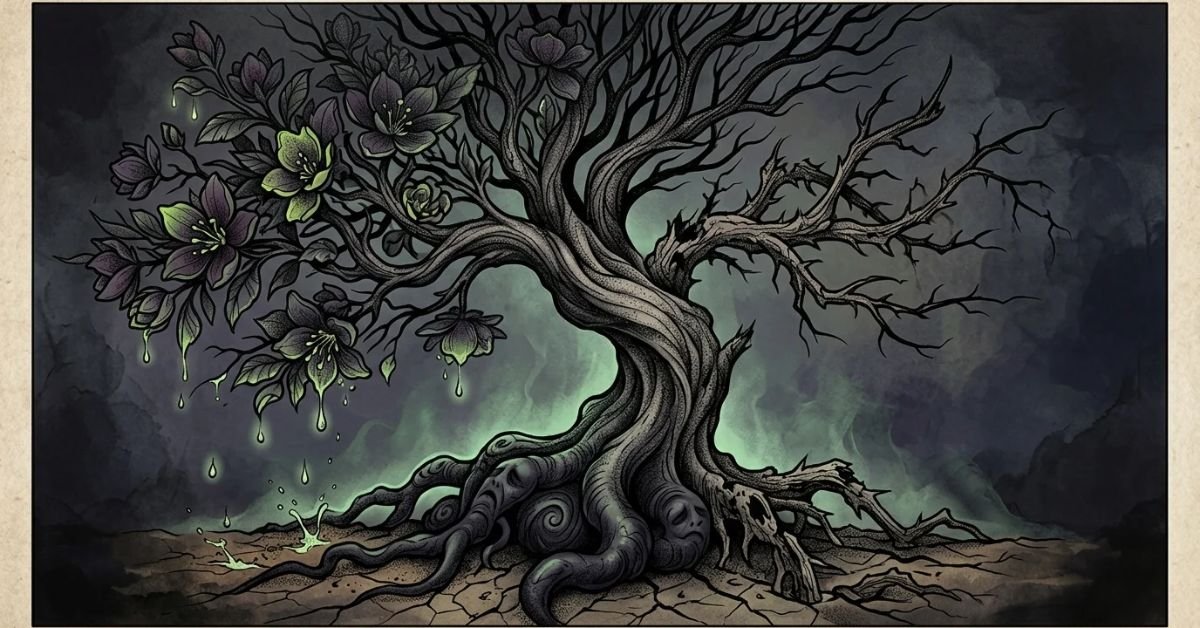
A poison tree tattoo often represents emotions that grow when you keep them hidden. The poison tree tattoo meaning can include suppressed anger, resentment, betrayal, grief, jealousy, or unresolved emotional pain.
Rather than showing simple darkness, the design often works as an emotional metaphor. It reminds you that feelings can take root and become stronger when you never address them.
Common interpretations include:
- Suppressed or hidden anger
- Resentment and bitterness
- Betrayal and broken trust
- Revenge and its consequences
- Toxic relationships and emotional pain
- Inner conflict and emotional exhaustion
- Self-awareness and emotional maturity
- Healing, recovery, and personal transformation
For some people, the tattoo acts as a warning. It says that buried pain can eventually affect everything around you.
For others, it represents survival. The darkness becomes part of their personal story without defining their future.
Conversation example:
Friend: What does your poison tree tattoo symbolize?
You: It reminds me not to let old anger grow into something destructive.
Where Does the Poison Tree Symbol Come From?
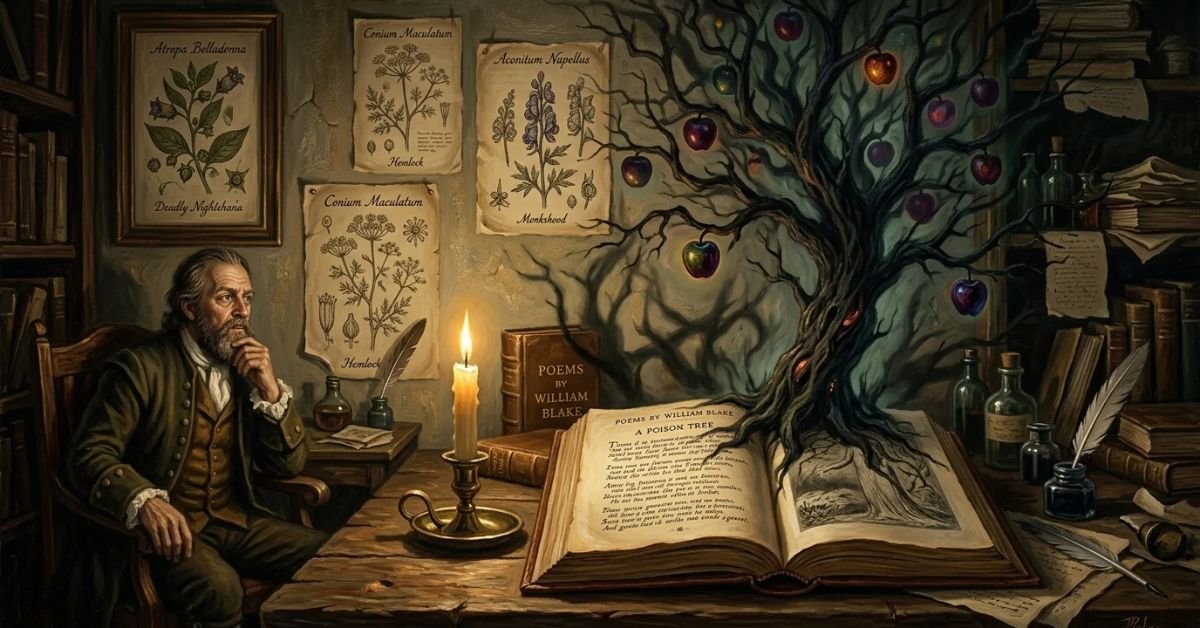
The strongest literary source behind the poison tree tattoo meaning is William Blake, an English poet and artist. His poem A Poison Tree appeared in Songs of Experience in 1794.
Blake uses a tree as a powerful metaphor for anger. The poem contrasts anger that someone expresses with anger that someone hides and continues to nurture.
That idea gives the poison tree tattoo symbolism its darker emotional edge. A tree normally suggests growth, stability, strength, or family. Blake turns that familiar image into something more dangerous.
The symbol combines two simple ideas:
- A tree represents growth.
- Poison represents danger and destruction.
- Together, they suggest harmful emotions growing over time.
Some tattoo designs also include biblical imagery, such as an apple or serpent. These elements can suggest temptation, forbidden knowledge, deception, or moral choices.
However, a poison tree isn’t an official Bible symbol. Its main literary connection remains Blake’s poem.
Conversation example:
Friend: Is this tattoo from a biblical story?
You: Not exactly. It’s mainly connected to William Blake’s A Poison Tree.
The William Blake Poem: A Quick Breakdown
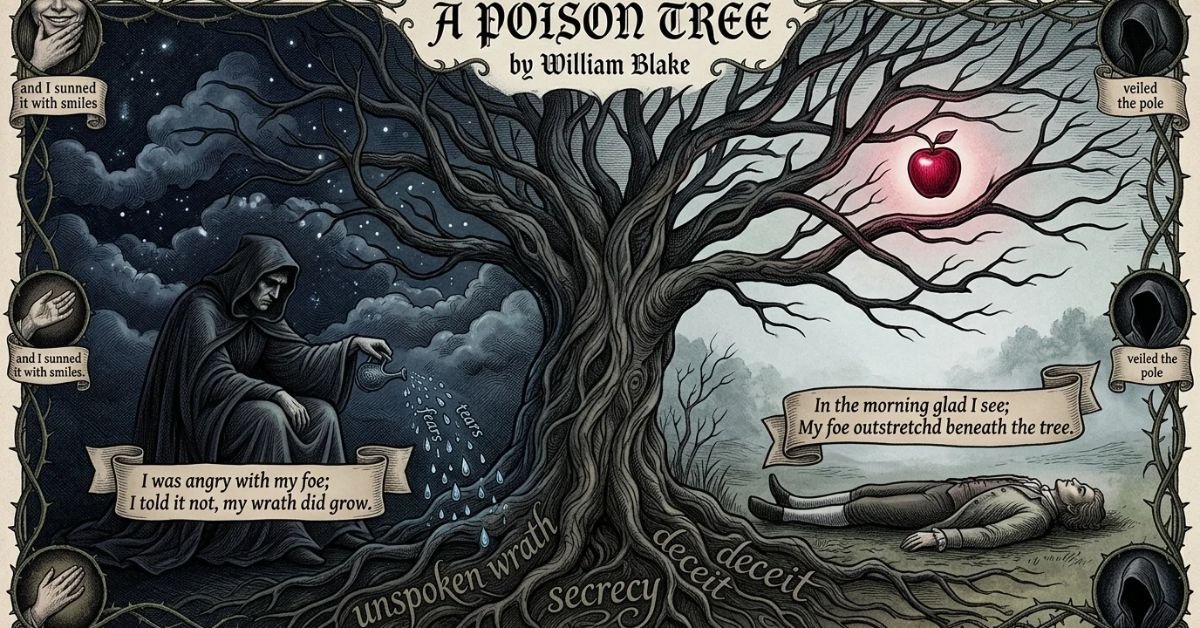
William Blake’s A Poison Tree provides the foundation for much of the modern poison tree tattoo meaning. The poem appears in Songs of Experience, published in 1794.
Its central idea is simple but powerful. Anger can change depending on whether you express it or hide it.
Blake creates a contrast between a friend and an enemy. When anger toward a friend gets expressed, it fades. Hidden anger toward an enemy continues to grow.
That emotional progression creates the poem’s central metaphor:
Anger → nurturing → growth → fruit → consequences
This poem breakdown explains why a poison tree works so well as a literary tattoo. The image can represent darkness, revenge, emotional pain, or a warning about unresolved feelings.
A tattoo artist can also use visual details to strengthen the message:
- Deep roots for buried emotions
- Twisted branches for growing conflict
- Poison fruit for consequences
- Thorns for pain and protection
Conversation example:
Friend: Why does the tree look beautiful but dangerous?
You: That’s the point. The poem connects hidden anger with something that grows quietly.
Anger that is expressed
Blake first presents anger that gets expressed rather than buried. The speaker feels angry with a friend but communicates those feelings openly.
As a result, the anger fades instead of becoming something larger. This contrast helps explain an important part of poison tree tattoo symbolism.
The tattoo can therefore serve as a reminder about communication. Not every difficult emotion needs to become a permanent wound.
For some people, this interpretation shifts the design away from revenge. Instead, it represents emotional honesty and healthier relationships.
The idea can also connect with emotional release and emotional maturity. Speaking about hurt doesn’t always solve everything, but silence isn’t always the answer either.
A design inspired by this meaning might include:
- New leaves
- Flowers
- Sunlight
- Open branches
- Healthy roots
These details can introduce hope, healing, and emotional growth into a dark botanical tattoo.
Conversation example:
Friend: Does the tree always represent anger?
You: Not necessarily. It can remind someone to express anger before it grows.
Anger that is hidden
The darker side of Blake’s poem begins with hidden anger. Instead of confronting the enemy, the speaker keeps the emotion inside and continues feeding it.
That idea forms a major part of the poison tree tattoo meaning. Suppressed anger doesn’t simply disappear because nobody sees it.
Over time, hidden resentment can become bitterness, inner conflict, or emotional exhaustion. That’s why some people choose this design after experiencing betrayal or broken trust.
The tattoo can represent what happened without celebrating the anger itself.
Common themes include:
- Suppressed anger
- Resentment
- Betrayal
- Jealousy
- Bitterness
- Revenge
- Unresolved emotional pain
- Toxicity
For someone leaving a toxic relationship, the design might become a personal reminder: don’t keep feeding what once hurt you.
Conversation example:
Friend: Is your tattoo about revenge?
You: Partly. Mostly, it reminds me what hidden resentment can become.
The tree and its fruit
The tree becomes the poem’s most memorable image because it turns hidden emotion into something visible. The growing tree eventually produces a poisoned apple, linking emotional growth with dangerous consequences.
For tattoo art, the apple can represent temptation, revenge, deception, or a harmful choice. It can also symbolize the moment when buried emotions finally produce visible results.
This is where poison tree tattoo symbolism becomes especially layered. A beautiful tree with dark fruit can show the contrast between appearance and reality.
You might see several elements in a design:
- Poison fruit or a single apple
- Fallen fruit
- Gnarled branches
- Deep or tangled roots
- Thorns
- A serpent or snake
- Light versus darkness
Some designs borrow biblical imagery to strengthen ideas of temptation and consequences. However, these additions create an interpretation rather than a fixed religious meaning.
Conversation example:
Friend: Why is there an apple on the tree?
You: It connects the tattoo to Blake’s poem and represents temptation and consequences.
Biblical and Historical Roots of the Poison Tree
The poison tree tattoo meaning mainly comes from William Blake’s A Poison Tree, not directly from the Bible. Blake published the poem in Songs of Experience in 1794.
The tree represents anger that grows when someone hides it. Its poisoned fruit then suggests temptation, revenge, and consequences.
Biblical stories can still influence some poison tree tattoo designs. Apples, serpents, thorns, and fallen fruit often create a spiritual interpretation.
However, these elements don’t give the tattoo one fixed religious meaning. They simply add another layer to its symbolism.
Common biblical or historical themes include:
- Temptation and forbidden knowledge
- Moral choices and consequences
- Deception and betrayal
- Light versus darkness
- Spiritual conflict
- Personal guilt or reflection
Conversation example:
Friend: Is a poison tree tattoo a biblical symbol?
You: Not specifically. Its main source is Blake’s poem, though biblical imagery can influence the design.
What Emotions Does a Poison Tree Tattoo Represent?
The poison tree tattoo meaning often centers on emotions that grow beneath the surface. The design can represent pain that someone carried for years.
Suppressed anger remains one of its strongest themes. However, resentment isn’t the only possible interpretation.
Someone might choose this symbolic tree tattoo after betrayal, a toxic relationship, or a painful period of personal change.
Common emotions and themes include:
- Hidden anger and resentment
- Betrayal and broken trust
- Revenge and bitterness
- Grief and jealousy
- Emotional pain
- Inner conflict
- Emotional exhaustion
- Toxicity and toxic relationships
- Forgiveness and emotional release
- Healing and recovery
- Self-awareness and emotional maturity
- Survival and personal transformation
The meaning can also become hopeful. New growth may represent emotional healing after darkness.
Conversation example:
Friend: Does your tattoo represent something painful?
You: Yes. It reminds me that pain can grow unless I learn to deal with it.
Poison Tree Tattoo Designs: What the Visual Elements Mean
A poison tree tattoo becomes more personal when you choose specific visual details. Every element can change the emotional tone of the design.
A tattoo artist might combine roots, branches, fruit, thorns, or flowers to tell a particular story.
For example, a dark tree with a poisoned apple feels more threatening. New leaves and sunlight can shift the same design toward recovery and hope.
Popular design elements include:
- Deep or tangled roots
- Twisted or gnarled branches
- Poisoned apple or poison fruit
- Thorns
- Dead branches
- New leaves
- Flowers
- Fallen fruit
- Serpent or snake
- Contrasting light
- Ravens, chains, skulls, or blood
The best design usually keeps the central symbolism clear. Too many details can reduce readability, especially in small tattoos.
Conversation example:
Friend: Why did you add flowers to such a dark tree?
You: They represent healing and growth after everything I went through.
Roots
Roots give the poison tree tattoo meaning a deeper emotional layer. They can represent where pain began and how long it has remained beneath the surface.
Deep or tangled roots may symbolize old wounds, buried resentment, childhood struggles, or unresolved emotional pain.
Because roots stay hidden underground, they work well as a metaphor for feelings that other people don’t see.
You can also use roots to represent strength. A tree needs strong roots to survive difficult conditions.
Possible meanings include:
- Buried emotions
- Old wounds
- Hidden anger
- Family history
- Emotional foundations
- Survival and strength
- Roots and branches tattoo meaning
A detailed design can make the roots spread widely beneath the tree. A simplified design may use only a few lines.
Conversation example:
Friend: Why are the roots so large?
You: They represent the old emotions that shaped who I became.
Twisted branches
Twisted branches can make a poison tree tattoo look mysterious and emotionally intense. Their uneven shape often suggests conflict that has grown over time.
Gnarled branches may represent complicated memories, resentment, or emotional struggles that never followed a straight path.
They also create strong visual movement. The branches can reach outward like thoughts spreading through someone’s life.
Depending on the style, they might represent:
- Inner conflict
- Growing resentment
- Emotional chaos
- Difficult memories
- Darkness
- Toxic relationships
- Personal transformation
A tattoo artist can make the branches delicate or heavily twisted. That choice affects the overall mood.
For a gothic tree tattoo, exaggerated branches can create a darker atmosphere. A cleaner design may focus more on symbolism than dramatic detail.
Conversation example:
Friend: Why aren’t the branches straight?
You: Their twisted shape represents how complicated emotions can become over time.
Poisoned apple or fruit
The poisoned apple connects directly with Blake’s poem and remains one of the strongest visual choices for this tattoo.
The apple can represent temptation, revenge, deception, danger, or consequences. Its attractive appearance makes the metaphor even stronger.
A beautiful fruit can hide something harmful inside. That contrast gives the poison tree tattoo symbolism much of its visual power.
You can use:
- A single poisoned apple
- Several pieces of poison fruit
- Fallen fruit beneath the tree
- A bitten apple
- An apple surrounded by thorns
- An apple paired with a serpent
A poison apple tattoo can also work as a separate design. When combined with the tree, however, the literary connection becomes clearer.
Conversation example:
Friend: Why make the apple look beautiful?
You: Because the design shows how something attractive can still carry danger.
Thorns
Thorns add a defensive quality to poison tree tattoo designs. They can represent pain, emotional protection, bitterness, or personal boundaries.
Someone recovering from betrayal might use thorns to show that painful experiences changed how they protect themselves.
They can also make a dark botanical tattoo feel more dramatic. However, adding too many thorns may overwhelm the main tree.
Possible meanings include:
- Emotional pain
- Protection
- Bitterness
- Boundaries
- Betrayal
- Defense against future harm
Thorns work especially well around branches, roots, or a poisoned apple. Their sharp shape creates an immediate visual warning.
Conversation example:
Friend: Why did you add thorns around the branches?
You: They represent the boundaries I learned to build after being hurt.
Dead branches
Dead branches can shift the poison tree tattoo meaning toward loss, grief, exhaustion, or the end of a painful chapter.
Unlike twisted branches, which suggest ongoing emotional conflict, dead branches can symbolize something that has already ended.
They may represent a broken relationship, lost connection, emotional exhaustion, or a difficult period that no longer controls your life.
This design element can suggest:
- Loss
- Mortality
- Grief
- Emotional exhaustion
- Broken relationships
- Endings
- Letting go
A few dead branches can create contrast without making the entire tree look lifeless.
For example, you might combine dead branches with new leaves. That contrast can show destruction followed by recovery.
Conversation example:
Friend: Why are some branches dead while others have leaves?
You: The dead branches represent what ended, while the leaves represent what grew afterward.
New leaves or flowers
New leaves and flowers can give a poison tree tattoo a surprisingly hopeful meaning. They suggest recovery, rebirth, forgiveness, and emotional growth.
This approach doesn’t erase the darker symbolism. Instead, it shows that healing can grow from painful experiences.
New growth may represent:
- Recovery after hardship
- Emotional healing
- Forgiveness
- Personal transformation
- Emotional maturity
- Hope
- Rebirth
- A fresh beginning
Adding sunlight can strengthen this interpretation. The contrast between dark roots and bright flowers creates a visual story of change.
For someone who sees the tattoo as a reminder rather than a warning, new growth can become the most important detail.
Conversation example:
Friend: Why add flowers to the poison tree?
You: They show that something painful can still lead to growth, healing, and a new beginning.
Who Gets Poison Tree Tattoos and Why?
A poison tree tattoo meaning can be deeply personal. People often choose this design to represent emotions, difficult experiences, or lessons from the past.
Some people connect the tattoo with suppressed anger, betrayal, broken trust, or toxic relationships. Others see it as a reminder of healing and emotional growth.
Common reasons include:
- Remembering a painful relationship or personal story
- Representing hidden anger or resentment
- Marking survival after emotional pain
- Showing personal transformation and self-awareness
- Expressing interest in William Blake or literary tattoo art
- Using darkness as a symbol of strength and recovery
For some, the tattoo becomes a reminder to communicate feelings instead of letting bitterness grow.
Conversation example:
Friend: Why did you choose that tree?
You: It represents something painful I survived and learned from.
Poison Tree Tattoo vs. Other Dark Tree Tattoos: Key Differences
The poison tree tattoo meaning differs from other dark tree designs because it often focuses on hidden emotions and their consequences.
A dead tree tattoo may represent loss, grief, or an ending. A burning tree tattoo can suggest destruction, change, or emotional intensity.
| Tattoo Type | Common Interpretation |
| Poison Tree | Resentment, hidden anger, consequences |
| Dead Tree | Loss, grief, endings |
| Tree of Life | Family, stability, growth |
| Haunted Tree | Mystery, darkness, fear |
| Burning Tree | Destruction, change, rebirth |
| Willow Tree | Sadness, resilience, emotional strength |
Design details can also change the interpretation. Roots may suggest deep memories, while new leaves can represent healing.
Conversation example:
Friend: Is your tattoo just a dead tree?
You: No, the poison tree represents emotions that were left unresolved.
Placement Ideas and What They Add to the Meaning
Tattoo placement can add another layer to the poison tree tattoo meaning. Some people choose visible areas to make the design part of their everyday expression.
Others prefer private placements because the tattoo represents a personal story, emotional wound, or difficult period.
Popular choices include:
- Forearm: Visibility and personal expression
- Chest: Deep emotional connection
- Back: A private or larger statement
- Ribs: Personal pain and intimacy
- Leg or calf: Strength, movement, and personal growth
The size also matters. A small tattoo may use simple roots and branches. A larger design can include apples, thorns, snakes, skulls, or contrasting sunlight.
Your tattoo artist can help balance symbolism, readability, and aesthetics.
Forearm
A forearm placement makes the poison tree tattoo meaning easy to see. It works well for people who want their tattoo to remain visible during everyday life.
The forearm also gives enough space for vertical artwork. A tree can grow naturally from the wrist toward the elbow.
Possible design choices include:
- Deep or tangled roots near the wrist
- Twisted branches moving upward
- A poisoned apple near the center
- Small thorns around the branches
- New leaves showing recovery
This placement can turn the tattoo into a daily reminder. It may represent survival, emotional release, or personal transformation.
Conversation example:
Friend: Why did you put it on your forearm?
You: I wanted its meaning to stay visible as a reminder of what I overcame.
Chest
The chest can make the poison tree tattoo meaning feel especially personal. It sits close to the heart, so people may connect the placement with love, betrayal, grief, or emotional pain.
A chest design also allows a tattoo artist to create detailed artwork. Larger trees can spread across the chest with branches reaching toward the shoulders.
Consider adding:
- A poisoned apple near the heart
- Dark roots beneath the tree
- Thorns around the trunk
- A small light source behind the branches
- New flowers representing healing
This placement can symbolize emotions that remain deeply connected to your personal story.
Conversation example:
Friend: Why place the tree over your heart?
You: It represents something that affected me deeply but helped me grow.
Back
The back offers plenty of space for a detailed poison tree tattoo meaning design. It works especially well when the artwork includes large roots, gnarled branches, and multiple symbolic elements.
Because the back is usually covered, this placement can also feel private. The tattoo may represent something personal without being visible every day.
You could include:
- A large twisted tree
- Deep tangled roots
- Fallen fruit
- Ravens or snakes
- Thorns around the trunk
- Sunlight breaking through dark branches
A vertical design can follow the natural shape of the spine. Larger artwork also gives the tattoo artist room to create strong contrast between darkness and light.
Conversation example:
Friend: Why choose your back?
You: I wanted the design to tell my whole story without being constantly visible.
Ribs
Rib placement can give the poison tree tattoo meaning a more private and intimate feeling. This area works well for people who want their tattoo to represent emotional pain, recovery, or a personal reminder.
The ribs offer a long vertical space. A narrow tree can fit naturally along the body.
Popular ideas include:
- A small poison tree with twisted branches
- A single fallen apple
- Thin thorns around the trunk
- Dark roots with new flowers
- Light breaking through the branches
Because the area provides limited width, a simplified design may remain clearer over time.
Conversation example:
Friend: Why keep the tattoo on your ribs?
You: Its meaning is personal, so I wanted the design somewhere more private.
Leg or Calf
A leg or calf placement gives the poison tree tattoo meaning a connection with movement, strength, and personal growth.
The calf provides a natural vertical canvas. This makes it suitable for a tree that starts with deep roots and rises toward new leaves.
Possible elements include:
- Strong roots representing stability
- Twisted branches showing inner conflict
- A poisoned apple symbolizing consequences
- Dead branches representing loss
- New leaves showing recovery
- Flowers representing hope and healing
A calf tattoo can also work well as a medium-sized design. Your tattoo artist can adjust the artwork to match the shape of your leg.
Conversation example:
Friend: Why did you choose your calf?
You: The tree grows upward, so it reminds me that healing means moving forward.
Common Mistakes People Make With This Tattoo
A poison tree tattoo meaning can change depending on the design and personal story behind it. Avoiding common mistakes helps keep the symbolism clear.
A meaningful tattoo should balance emotion, symbolism, and visual clarity. Think about what you want the design to communicate before choosing every detail.
1. Assuming the Meaning Is Always Revenge
Many people connect a poison tree with revenge. However, the poison tree tattoo meaning can represent much more than revenge.
It may symbolize suppressed anger, resentment, betrayal, emotional pain, or the consequences of keeping feelings hidden.
- Revenge is only one possible interpretation.
- Healing can also be part of the meaning.
- Personal experiences can completely change the symbolism.
Conversation example:
Friend: Does your tattoo mean revenge?
You: Not exactly. It represents anger I learned to release.
2. Ignoring the Literary Origin
The poison tree tattoo meaning is strongly connected with William Blake and his poem A Poison Tree.
The poem appears in Songs of Experience, published in 1794. It uses a tree as a metaphor for anger that grows when it remains hidden.
Ignoring this origin can make the design seem like an ordinary dark tree tattoo.
- Learn about William Blake.
- Read the poem breakdown.
- Consider the anger expressed versus anger hidden.
- Decide whether you want a literary tattoo connection.
Conversation example:
Friend: Why a poison tree?
You: It connects to William Blake’s poem about hidden anger and its consequences.
3. Adding Too Many Dark Symbols
A poison tree already carries strong symbolism. Adding too many skulls, chains, ravens, snakes, thorns, and blood can make the artwork feel crowded.
The poison tree tattoo meaning becomes harder to understand when every symbol competes for attention.
Try choosing only a few meaningful details.
- Add one main focal point.
- Use thorns to suggest pain or protection.
- Add an apple for temptation or consequences.
- Use sunlight to create contrast.
- Keep supporting symbols simple.
Conversation example:
Friend: Why did you remove the skulls?
You: The tree is the main symbol, so I wanted its meaning to stay clear.
4. Choosing Aesthetics Over Readability
A beautiful design still needs to remain readable. Extremely detailed roots, branches, and tiny symbols can become difficult to recognize over time.
Your poison tree tattoo meaning should remain visible through the overall shape, not depend on dozens of tiny details.
Work with an experienced tattoo artist before finalizing the design.
Consider:
- Simplified designs for small tattoos
- Clear branch shapes
- Strong contrast between light and darkness
- Appropriate spacing
- A size that suits the placement
Conversation example:
Tattoo artist: Do you want every branch highly detailed?
You: I prefer fewer details if that keeps the design readable.
5. Forgetting the Healing Interpretation
A dark tattoo does not have to represent permanent sadness. The poison tree tattoo meaning can also describe recovery after emotional pain.
New leaves, flowers, or sunlight can show that difficult experiences do not have to define your future.
The design can represent:
- Forgiveness
- Recovery
- Emotional growth
- Self-awareness
- Personal transformation
- Hope after darkness
Conversation example:
Friend: Your tree looks dark, but I see flowers too.
You: The darkness represents my past. The flowers represent healing.
Does the Poison Tree Tattoo Have a Positive Meaning?
Yes, the poison tree tattoo meaning can include positive ideas. Its darker symbolism does not automatically make it a symbol of hatred or revenge.
For some people, the tree represents learning from emotional pain. The roots can represent the past, while new leaves show growth and recovery.
A positive interpretation may include:
- Healing after betrayal
- Forgiveness instead of resentment
- Emotional maturity
- Self-awareness
- Personal transformation
- Strength after difficult experiences
- Rebirth and renewed hope
- Letting go of toxic relationships
Design choices can reinforce this message. Sunlight, flowers, and new leaves can create a strong contrast with dark branches or fallen fruit.
Conversation example:
Friend: Why does your poison tree have flowers?
You: They show that something painful can still lead to growth.
Related Keywords Worth Knowing
Understanding related terms can make the poison tree tattoo meaning easier to research. These phrases also describe different interpretations, designs, and emotional themes connected with the symbol.
Useful related keywords include:
- Poison tree tattoo symbolism
- Poison tree tattoo designs
- A Poison Tree meaning
- William Blake tattoo
- Dark botanical tattoo
- Gothic tree tattoo
- Dark tree tattoo
- Suppressed anger tattoo
- Resentment tattoo
- Toxic relationship tattoo
- Betrayal tattoo symbolism
- Revenge tattoo meaning
- Emotional healing tattoo
- Poison apple tattoo
- Apple and snake tattoo
- Dead tree tattoo
- Tree of Life tattoo
- Haunted tree tattoo
- Burning tree tattoo
- Willow tree tattoo
- Roots and branches tattoo meaning
- Symbolic tree tattoo
- Literary tattoo
- Emotional growth tattoo
These terms cover different sides of the concept. Some focus on literary symbolism, while others emphasize emotional pain, darkness, healing, or personal transformation.
Conversation example:
Friend: What should I search for more ideas?
You: Try poison tree symbolism, William Blake tattoo, and emotional healing tattoo.
Frequently Asked Questions
What Does a Poison Tree Tattoo Mean?
The poison tree tattoo meaning can represent hidden anger, resentment, betrayal, emotional pain, healing, growth, or personal transformation.
Is a Poison Tree Tattoo Connected to William Blake?
Yes, the poison tree tattoo meaning connects closely with William Blake’s poem A Poison Tree, published in 1794.
Does a Poison Tree Tattoo Mean Revenge?
Revenge can be part of the poison tree tattoo meaning, but it may also represent resentment, consequences, healing, or emotional growth.
What Does the Apple Mean in a Poison Tree Tattoo?
The apple can symbolize temptation, deception, forbidden knowledge, revenge, or consequences within the poison tree tattoo meaning.
Can a Poison Tree Tattoo Have a Positive Meaning?
Yes, the poison tree tattoo meaning can include healing, forgiveness, self-awareness, strength, recovery, hope, and personal transformation.
Is a Poison Tree Tattoo a Biblical Symbol?
No, the poison tree tattoo meaning is mainly linked to William Blake, though biblical imagery can inspire apples, snakes, temptation, and consequences.
Conclusion
The poison tree tattoo meaning can hold many layers. It may represent hidden anger, resentment, betrayal, or emotional pain. For others, the poison tree tattoo meaning connects with William Blake and his famous poem A Poison Tree. The roots can show deep wounds, while twisted branches may represent difficult emotions. A poisoned apple can suggest temptation, revenge, or consequences. These details give the tattoo a strong and personal message.
Still, the poison tree tattoo meaning does not have to stay dark. New leaves, flowers, and sunlight can represent healing and hope. The poison tree tattoo meaning may also reflect strength, self-awareness, forgiveness, and personal growth. Placement can add another personal touch to the design. Whether you choose a forearm, chest, back, ribs, or calf, the meaning comes from your story. In the end, your poison tree tattoo meaning can remind you of both pain and growth.

Muaz is a language enthusiast and content writer at Businessleam, creating clear, helpful articles about words, meanings, grammar, phrases, and modern English.