

Ever seen someone text FML after a bad day and wondered what those three letters mean? You’re not alone! This popular internet abbreviation appears in text messages, memes, social media posts, and everyday online chats. People use it when they face embarrassing moments, unexpected problems, or a streak of bad luck. Sometimes, it expresses genuine frustration. Other times, it turns a small mistake into a funny, dramatic moment.
The fml meaning is usually F** My Life*, a casual phrase people use to express disappointment or frustration. Imagine missing your bus, spilling coffee on your shirt, or sending a message to the wrong person. You might see someone use FML to describe that moment. However, this abbreviation includes a swear word, so it may sound rude in formal settings. Let’s look at its meaning, common uses, real-life examples, and the best ways to respond.
FML Meaning Explained: Uses, Examples & More 2026 What Does FML Mean in Text?
The fml meaning in text is F* My Life**. People use this popular text slang when they feel frustrated, embarrassed, disappointed, or unlucky. It helps express emotions without writing a long explanation.
FML is an abbreviation commonly found in text messages, online chats, memes, and social media posts. Although it contains a swear word, many people use it casually with friends.
The meaning depends on the situation and the sender’s tone. Sometimes, FML expresses genuine frustration. Other times, it adds humor to a small everyday problem.
People often use FML when:
- Something goes wrong unexpectedly.
- They feel embarrassed about a mistake.
- They experience a frustrating or unlucky moment.
- They want to share a relatable problem.
For example: If you miss your bus just as it leaves, you might text your friend, “FML, I missed the bus again!”
Simple Example:
Imagine studying all night for an important exam. You arrive at school and realize you studied the wrong chapter.
Conversation:
- Alex: I studied for five hours, but the exam covered different chapters.
- Sam: Seriously? What happened?
- Alex: Yeah, FML. I should’ve checked the syllabus.
Here, Alex uses FML to express disappointment and frustration.
Remember that FML isn’t always serious. Your friends might also use it jokingly when something minor goes wrong. The surrounding context helps you understand what they really mean.
Why Do People Use FML in Conversations?
People use FML because it’s a quick way to express frustration, disappointment, or bad luck. Instead of explaining every detail, they can use three letters to communicate how they feel.
This abbreviation has become common in texting and internet slang. You may see it in group chats, social media comments, funny memes, and everyday conversations.
Here are some common reasons people use FML:
- Express emotions: Show annoyance or disappointment quickly.
- Share relatable moments: Talk about mistakes and unlucky situations.
- Add humor: Make a frustrating experience sound funny.
- Vent frustration: Let friends know they’re having a difficult day.
- Use exaggeration: Make a small problem sound more dramatic.
For example, someone might write, “My phone died right before I ordered my ride. FML.”
The message communicates annoyance without needing a lengthy explanation.
Emotional Shortcut
FML works as an emotional shortcut because it communicates a feeling in just three letters. Readers often understand the frustration immediately, especially when they know the situation.
Think about how you might describe a terrible morning. You miss your alarm, spill your coffee, and arrive late for work. Writing every detail takes time.
Instead, you might send a quick message to your friend.
Conversation:
- Mia: I missed my alarm and spilled coffee on my shirt.
- Jake: Wow, rough morning!
- Mia: FML. It’s not even 8 a.m. yet.
The abbreviation makes Mia’s frustration clear while adding a little humor.
People also use FML when coping with stress through jokes or shared experiences. However, you shouldn’t assume everyone is joking. If someone describes a serious problem, offer support instead of laughing it off.
The Tone Behind FML (Important to Understand)
The fml meaning can feel different depending on the situation. Although the abbreviation usually stands for F*** My Life, the sender’s tone determines how you should interpret it.
Someone might use FML after experiencing genuine disappointment. Another person might use it after dropping a slice of pizza.
Pay attention to the message, the relationship, and the surrounding conversation. Emojis can also provide useful clues, although they don’t always reveal someone’s true feelings.
FML commonly appears in three tones:
- Serious and frustrated
- Funny or dramatic
- Sarcastic and playful
Understanding these differences helps you avoid misunderstandings in online communication.
1. Serious Tone
People use FML seriously when they feel genuinely upset, disappointed, or overwhelmed. It can express frustration after an important setback or a difficult experience.
For example, someone might lose an important document, fail an exam, or receive disappointing news. In these situations, FML may reflect real emotional distress rather than humor.
Conversation:
- Ryan: I worked on that project for weeks, and my computer crashed.
- Chris: Did you save a backup?
- Ryan: No, I lost everything. FML.
Ryan isn’t necessarily joking. He’s expressing genuine frustration about losing his work.
When someone uses FML in a serious tone, respond with empathy. Ask what happened or offer practical help.
A supportive response might be, “That really sucks. Is there any way to recover your files?”
Don’t assume every negative message is harmless exaggeration. Context matters.
2. Funny / Dramatic Tone
FML often appears in funny or dramatic situations. People use it to exaggerate minor problems and make everyday frustrations more entertaining.
This style is common in memes, social media captions, and informal chats. The goal isn’t always to complain seriously. Sometimes, people simply want others to laugh or relate to their experience.
Conversation:
- Lily: I dropped my last cookie on the floor.
- Emma: Nooo! Not the cookie!
- Lily: FML 😂
Lily uses FML dramatically because losing a cookie isn’t usually a major problem.
You might also see this abbreviation when someone misses a favorite TV show’s episode or forgets to charge their phone.
The humor comes from treating a small inconvenience like a disaster. Emojis, playful wording, and the situation itself can signal this tone.
3. Sarcastic Tone
A sarcastic tone uses FML to highlight how annoying, inconvenient, or ridiculous a situation feels. The sender may not be seriously upset. Instead, they’re making fun of their own bad luck.
For example, imagine checking the weather before leaving home. You carry an umbrella all day, then get caught in the rain after leaving it at work.
Conversation:
- Noah: I finally washed my car.
- Ethan: Nice! Is it looking good?
- Noah: It started raining five minutes later. FML 🙃
Noah uses FML sarcastically to point out the terrible timing.
This kind of internet slang often relies on exaggeration. The reader understands that the situation is irritating but not necessarily serious.
However, sarcasm can be difficult to interpret in text messages because readers can’t hear your voice. Choose your words carefully if you don’t want someone to misunderstand your intention.
Common Situations Where FML Is Used

People use FML in many everyday situations, especially when something goes wrong unexpectedly. It can describe frustration, embarrassment, disappointment, or a streak of bad luck.
You’ll often see it in personal text messages, group chats, social media posts, and relatable memes. The abbreviation gives people a quick way to share their experiences.
Common situations include:
- Missing an important appointment
- Forgetting homework or an assignment
- Sending a private message to the wrong person
- Getting stuck in traffic
- Breaking something by accident
- Being left on read by a crush
For example, someone might text, “I left my lunch at home again. FML.”
The expression works best in casual conversations where people understand your sense of humor. Since it contains profanity, avoid it in formal settings or professional communication.
Everyday Problems
Small everyday problems are among the most common reasons people use FML. These situations might seem minor, but they can feel incredibly annoying when several happen together.
Imagine waking up late, missing the bus, and realizing you forgot your wallet. You might feel like nothing is going your way.
Conversation:
- Ava: I missed the bus and forgot my wallet.
- Mia: That’s a terrible start to the day.
- Ava: And I haven’t even had breakfast. FML 😩
Here, Ava uses FML to express annoyance about several small problems.
Other everyday examples include:
- Dropping your phone while getting out of the car.
- Spilling coffee on a freshly washed shirt.
- Forgetting your charger before a long trip.
- Discovering your favorite restaurant is closed.
- Running out of phone battery during an important call.
These relatable moments often appear in memes because many people experience similar frustrations. FML turns an ordinary complaint into a short, expressive message.
Social Embarrassment
FML can also express embarrassment after an awkward social experience. People often use it when they make a mistake in public or wish they could undo something they just did.
For example, you might wave at someone who wasn’t waving at you. You might also tell an embarrassing story to the wrong audience.
Conversation:
- Zoe: I accidentally called my teacher Mom today.
- Ella: Please tell me you’re joking.
- Zoe: I wish. Everyone heard it. FML 😭
Zoe uses FML to express embarrassment while making the situation sound funny.
Another common example involves sending a personal message to the wrong person.
- Ben: I sent my crush’s message to my group chat.
- Max: How does that even happen?
- Ben: Don’t ask. FML.
These moments can feel uncomfortable at first. However, people often share them later as funny stories. FML helps communicate that mix of embarrassment, regret, and humor.
Bad Luck Moments
Sometimes, FML describes situations where everything seems to go wrong at once. People use it to express bad luck, especially when they couldn’t have prevented what happened.
Maybe your flight gets delayed, your phone breaks, or it starts raining just as you leave home. One inconvenience might be manageable, but several together can feel exhausting.
Conversation:
- Daniel: My flight got delayed, and my phone just stopped working.
- Chris: That’s some seriously bad luck.
- Daniel: I know. And my luggage is missing too. FML.
Daniel uses FML to vent about several frustrating events.
Other bad luck moments include:
- Getting a flat tire on the way to an interview.
- Losing your wallet before a trip.
- Having your internet stop working during an online exam.
- Discovering you’ve left your keys inside your locked house.
- Getting left on read after sending an important message.
People often share these experiences because others can relate. Sometimes, laughing about a rough day makes it easier to move forward.
Real-Life Examples of FML in Text
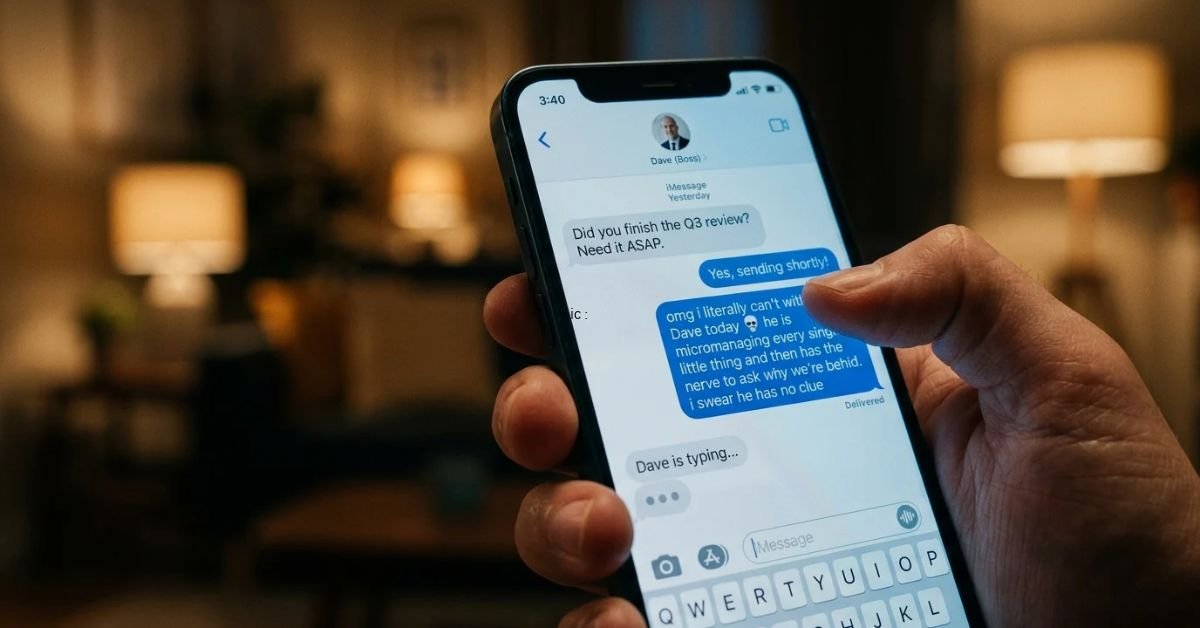
Understanding the fml meaning becomes easier when you see how people use it in everyday conversations. FML stands for “F*** My Life” and usually expresses frustration, embarrassment, disappointment, or bad luck.
People often use this text slang in messages, group chats, and social media posts. Sometimes, they genuinely feel upset. Other times, they’re exaggerating a minor problem for humor.
Here are some realistic examples:
- Missed an exam: “I woke up late and missed my exam. FML 😩”
- Relationship trouble: “My crush left me on read again. FML 💔”
- Everyday mistake: “I spilled coffee on my new shirt. FML.”
- Technology problems: “My laptop crashed before I saved my work. FML.”
- Funny situation: “I bought an umbrella, and now the sun is shining. FML 😂”
Conversation example:
- Jake: I forgot my headphones at home.
- Alex: That’s annoying.
- Jake: And my phone battery is at 2%. FML!
These examples show how context shapes the meaning. The same abbreviation can express genuine frustration or playful annoyance.
Is FML a Bad Word?
Yes, FML contains profanity because its standard expansion is “F*** My Life.” The abbreviation hides the swear word, but readers generally understand what it means.
Whether FML sounds rude or offensive depends on your audience and the situation. Friends might use it casually without causing offense. However, teachers, coworkers, or family members may consider it inappropriate.
FML commonly appears in internet slang, memes, and informal text messages. Still, that doesn’t make it suitable for every conversation.
When It’s Acceptable:
FML may fit when you’re chatting casually with people who understand your humor and communication style.
- Texting close friends about a frustrating day.
- Sharing a funny mistake in a group chat.
- Posting a humorous meme on social media.
- Describing a minor inconvenience with playful exaggeration.
Conversation example:
- Mia: I dropped my last slice of pizza.
- Emma: That’s heartbreaking!
- Mia: FML 😂
Here, the abbreviation adds humor rather than expressing serious distress.
When to Avoid It:
Avoid FML when the situation calls for respectful or professional language. Even an abbreviated swear word can create the wrong impression.
It’s best to avoid FML in:
- Professional emails and workplace messages.
- Job applications and interviews.
- Academic writing and school assignments.
- Formal conversations with people you don’t know well.
- Sensitive discussions where someone may misunderstand your tone.
Conversation example:
- Manager: Why wasn’t the report submitted on time?
- Employee: I encountered a technical issue, and I’m fixing it now.
This response sounds professional without unnecessary slang. When you’re unsure whether FML is appropriate, choose a polite alternative.
Alternative Meanings or Interpretations
The standard fml meaning is “F*** My Life.” People generally use it to express frustration, disappointment, embarrassment, or bad luck.
However, some people give FML softer interpretations in casual conversations. These versions replace the profanity with less offensive wording. They can make the expression feel more playful or suitable for certain audiences.
For example, someone might use FML when describing a minor inconvenience without intending to sound genuinely upset.
Keep in mind that these softer interpretations aren’t the abbreviation’s standard meaning. Context helps you understand the sender’s intention.
Softer Interpretations:
Some people reinterpret FML with phrases that sound less harsh. These alternatives can communicate frustration without using an explicit swear word.
Common examples include:
- Forget My Life: A playful replacement for the original phrase.
- My life is messed up: A broader expression of frustration.
- What a terrible day: A clear, polite way to describe bad luck.
- This is so frustrating: A direct way to express annoyance.
Conversation example:
- Lily: I missed the bus again. FML.
- Sophie: You could say, “What a terrible morning!”
- Lily: Honestly, that sounds much nicer.
If you want to avoid profanity, you don’t need to use FML at all. Choose wording that matches your feelings and audience.
Remember that people may interpret FML differently based on their habits and online communities. When the meaning isn’t clear, ask what the sender intended instead of assuming.
FML vs Similar Slang Terms
FML isn’t the only abbreviation people use to express emotions online. Other text slang terms communicate surprise, frustration, disbelief, humor, or disapproval.
Understanding these differences helps you choose the right expression for your message. Some terms sound playful, while others can feel rude or aggressive.
Here’s a simple slang comparison:
| Slang term | Full form | Common meaning |
| FML | F*** My Life | Frustration or bad luck |
| SMH | Shaking My Head | Disapproval or disbelief |
| OMG | Oh My God | Surprise or excitement |
| LOL | Laugh Out Loud | Humor or amusement |
| WTF | What The F*** | Shock, confusion, or anger |
Conversation examples:
- FML: “I forgot my wallet at home. FML.”
- SMH: “You forgot your keys again? SMH.”
- OMG: “OMG, we won the competition!”
- LOL: “Your cat just stole your sandwich. LOL.”
- WTF: “WTF? Why is the internet down again?”
People may also encounter abbreviations such as OP, THB, and YW in online conversations. Their meanings depend on context, and they don’t express the same feelings as FML.
Use FML when you want to vent about your own situation. Choose another abbreviation when you’re expressing a different emotion.
When Should You Use FML?
You can use FML when you want to express frustration, disappointment, embarrassment, or bad luck in a casual conversation. It works best when your audience understands internet slang and your sense of humor.
People often use it in text messages, group chats, memes, and social media captions. It can make everyday problems sound relatable, especially when you’re joking about a minor mistake.
However, think about your audience before sending it. FML contains a swear word, even when you write only the abbreviation.
Consider using FML when:
- You’re venting to close friends.
- Something inconvenient happens unexpectedly.
- You want to exaggerate a minor problem for humor.
- You’re sharing a relatable experience online.
Avoid it in professional communication, academic writing, and sensitive conversations.
Example:
Imagine you’re running late for work because your alarm didn’t ring. Then you spill coffee on your shirt just before leaving.
Conversation:
- Alex: My alarm didn’t ring, and I spilled coffee everywhere.
- Sam: That’s a rough morning!
- Alex: Seriously. FML 😩
In this conversation, FML communicates frustration with a slightly dramatic tone. Sam can understand the message without needing a long explanation.
If the situation is more serious, choose your words carefully. A supportive message or a clear explanation may work better than slang.
Ultimately, knowing when to use FML comes down to context, tone, and audience. Use it casually when it fits, and choose a polite alternative when it doesn’t.
When You Should NOT Use FML
The fml meaning is usually F** My Life*. People use it to express frustration, embarrassment, or bad luck. However, this slang term contains profanity, so it doesn’t fit every situation.
You should avoid FML when you need to sound respectful, professional, or serious. Someone might misunderstand your tone or find the phrase offensive.
- Professional emails: Use polite language when contacting your boss, clients, or coworkers.
- Academic writing: Avoid FML in school assignments, essays, and formal reports.
- Serious conversations: Choose clear words when discussing grief, health problems, or personal struggles.
- Unfamiliar audiences: You may not know whether someone feels comfortable with swear words.
Conversation example:
- Alex: How did your job interview go?
- Sam: I forgot my notes and stumbled over my answers. FML.
- Alex: That sounds stressful. I hope the next one goes better.
FML works well among friends who understand your humor. When in doubt, say That’s so frustrating instead.
How FML Became Popular
FML became popular as internet users looked for quick ways to share frustrating or embarrassing experiences. The phrase F** My Life* expresses a strong emotion in just three letters.
The website FMyLife, launched in the late 2000s, helped spread the abbreviation. It featured short, often funny stories about everyday misfortunes. Readers could relate to these moments and share their own experiences.
Online communities helped FML grow beyond one website. People began using it in text messages, internet forums, memes, and social media posts.
Common reasons for its popularity include:
- Brevity: Three letters communicate frustration quickly.
- Relatability: Everyone has days when things go wrong.
- Humor: Small disasters can become funny stories.
- Easy sharing: The abbreviation fits captions, comments, and chats.
Conversation example:
- Mia: I studied all night, and the test got postponed.
- Leo: FML 😭
- Mia: At least we get more time to prepare!
Today, FML remains recognizable internet slang. People use it seriously, sarcastically, or simply for a laugh.
Cultural Impact of FML in Online Communication
FML shows how internet slang has changed everyday communication. Instead of explaining a frustrating situation in several sentences, people can use three letters to express their feelings.
The abbreviation also reflects meme culture. Online users often turn embarrassing moments, bad luck, and everyday problems into relatable jokes. FML gives these stories a familiar ending.
You might see it in social media comments, memes, group chats, or funny personal stories. Its meaning often depends on the situation and the relationship between the people communicating.
What It Shows:
- Emotional shorthand: People use short expressions to communicate complex feelings.
- Shared experiences: FML helps others recognize familiar frustrations.
- Digital humor: It can turn a disappointing moment into a joke.
- Changing language: Internet communities continually shape slang and informal expressions.
Conversation example:
- Jamie: I dropped my sandwich right after buying it.
- Chris: FML moment 😂
- Jamie: Five seconds of happiness. Gone forever.
However, not everyone interprets FML the same way. Some people find it funny, while others consider the profanity rude. Understanding your audience helps you use it appropriately.
Can FML Be Used Positively?
Yes, FML can sometimes have a positive or playful meaning. Although the fml meaning usually expresses frustration, people often use it to joke about minor problems. The phrase can make an awkward moment feel less serious.
For example, you might use FML after losing a game, burning dinner, or missing your favorite show’s finale. You’re not necessarily upset about your life. You’re simply exaggerating your reaction for humor.
FML can also help friends bond over shared experiences. Everyone makes mistakes, and laughing about them can make the moment easier to handle.
- Self-deprecating humor: Laughing at your own silly mistakes.
- Playful exaggeration: Making a small problem sound dramatic.
- Relatable moments: Sharing everyday mishaps with friends.
- Stress relief: Using humor to lighten a frustrating situation.
Conversation example:
- Ava: I waved at someone who wasn’t waving at me.
- Ben: FML 😂
- Ava: I wanted the ground to swallow me!
Remember, FML doesn’t always sound positive. Check the context before assuming someone is joking.
FML in Social Media vs Text Messages
People use FML across different digital platforms, but the context can change how it sounds. In private chats, it often expresses immediate frustration. On social media, it may become part of a funny story or relatable post.
The fml meaning stays mostly the same across these platforms. However, emojis, captions, and the surrounding conversation can make the phrase sound serious, sarcastic, or playful.
In Text Messages:
FML often appears in quick conversations between friends, family members, or partners. Someone might send it after a frustrating event or an embarrassing mistake.
- It expresses immediate emotions.
- It often appears in casual, informal chats.
- Emojis help clarify the sender’s mood.
- Friends may respond with sympathy or jokes.
Conversation example:
- Ryan: My phone died before I could order a ride.
- Emma: FML 😭
- Ryan: Seriously! Now I have to find a charger.
On Social Media:
On platforms like TikTok, Instagram, Reddit, and X, FML often appears in captions, comments, memes, and short videos. Users share funny failures or unlucky moments that others can easily relate to.
- Memes: Highlight awkward or frustrating situations.
- Captions: Add humor to personal stories.
- Comments: React to someone else’s bad luck.
- Short videos: Turn everyday mistakes into entertaining content.
Example post:
Spent two hours getting ready, then realized the event was tomorrow. FML 😂
Social media often encourages exaggeration for entertainment. Still, the surrounding content determines whether FML sounds genuinely upset or simply funny.
How to Respond When Someone Says FML
Your response should match the person’s mood and the situation. Sometimes FML is a joke about a minor inconvenience. Other times, it signals genuine disappointment or stress.
Before replying, consider what the person shared. If they missed a bus, a playful response might work. If they lost something important or had a difficult day, a little empathy is better.
You don’t need to repeat the abbreviation. A simple, natural reply can show that you’re listening and understand their feelings.
Supportive Response:
Use a supportive response when someone sounds upset, overwhelmed, or disappointed. Acknowledge the problem instead of immediately making fun of it.
Helpful replies include:
- That sounds really frustrating.
- I’m sorry that happened to you.
- Are you okay? Want to talk about it?
- Hopefully, things get better soon.
- Is there anything I can do to help?
Conversation example:
- Lily: I missed my final exam because I read the schedule wrong. FML.
- Noah: Oh no, that’s stressful. Have you contacted your teacher yet?
This approach shows concern without making assumptions about how the person feels.
Light Response:
If someone clearly uses FML jokingly, a playful reply can keep the conversation fun. This works best when you know the person well and understand their sense of humor.
Try responses like these:
- That’s rough 😂
- Today really isn’t your day!
- The universe said, not today.
- FML moment of the week!
- At least you’ll laugh about it later.
Conversation example:
- Max: I dropped my pizza face down. FML.
- Jake: Your pizza chose violence today 😂
Keep your response friendly rather than dismissive. If the person seems genuinely upset, switch to a more supportive tone.
Does FML Have Different Meanings in Different Contexts?
Yes. Although FML most commonly means F** My Life*, its emotional meaning can change with the context. The same abbreviation might express genuine frustration, playful embarrassment, sarcasm, or dramatic humor.
For example, someone who misses an important appointment may use FML to show real disappointment. Another person might use it after losing a video game. In the second situation, the phrase may be mostly humorous.
You should also consider the relationship between the people chatting. Close friends may understand the joke immediately, while a coworker or unfamiliar person might interpret it differently.
Here are some common interpretations:
- Frustration: Something has gone wrong.
- Embarrassment: The person made an awkward mistake.
- Sarcasm: The person exaggerates a minor inconvenience.
- Humor: The person wants others to laugh at an unlucky moment.
- Stress: The person feels overwhelmed by a situation.
Conversation examples:
- Serious: I lost my wallet on the way to the airport. FML.
- Funny: I opened the fridge and forgot why I came here. FML 😂
- Sarcastic: My favorite show ended on a cliffhanger. FML.
Some people substitute phrases like Forget My Life to soften the profanity. However, that isn’t the standard expansion. Always consider the surrounding message before deciding what the sender means emotionally.
Key Takeaways
Understanding the fml meaning helps you interpret a common expression in texting and online communication. FML usually stands for F** My Life*. People use it to express frustration, disappointment, embarrassment, or bad luck.
However, the phrase isn’t always serious. Friends often use it to exaggerate everyday problems or turn awkward moments into jokes. Context, emojis, and the relationship between the people chatting can help you understand the intended tone.
Keep these important points in mind:
- Meaning: FML usually stands for F** My Life*.
- Tone: It can sound serious, funny, dramatic, or sarcastic.
- Common use: It appears in text messages, memes, comments, and social media captions.
- Language: It contains profanity, so it’s informal and may offend some people.
- Professional settings: Avoid using it in formal emails, academic writing, and workplace communication.
- Replies: Match the sender’s tone. Offer support when they seem genuinely upset.
Quick example:
- Alex: I forgot my umbrella, and now it’s pouring. FML.
- Sam: That’s unlucky! Hope you find somewhere dry.
The main rule is simple: understand the situation before interpreting FML. When you’re unsure, respond kindly and use clearer language in formal settings.
FAQ Section
What does FML mean in text from a girl or boy?
The fml meaning is usually F*** My Life, expressing frustration, embarrassment, or bad luck. Girls and boys use it similarly.
Is FML rude or offensive?
Yes, FML contains profanity and may offend some people. Its casual tone usually suits friends, memes, and informal chats.
Can I use FML in professional chats?
Avoid FML in professional chats because it contains a swear word. Use polite language with coworkers, clients, and managers.
What is a polite alternative to FML?
Try That’s frustrating, What a bad day, or Things aren’t going well. These phrases express disappointment without using profanity.
Why do people use FML jokingly?
People use FML jokingly to exaggerate small problems, share relatable moments, and make embarrassing situations feel funny rather than upsetting.
Conclusion (Final Thoughts)
Understanding the fml meaning makes online chats easier to follow. FML usually stands for F*** My Life. People use it to express frustration, embarrassment, disappointment, or bad luck. You may see FML in text messages, memes, social media posts, and casual conversations. Sometimes, the fml meaning sounds serious. Other times, it adds humor to small everyday problems. The situation and tone help you understand what someone really means.
Now that you know the fml meaning, you can recognize when and why people use this popular slang term. Remember, FML contains a swear word, so it may sound rude in formal settings. Avoid it in professional emails and serious conversations. Use polite alternatives when needed. Whether someone uses FML jokingly or seriously, always consider the context before replying. Understanding the fml meaning helps you communicate naturally and confidently online.

Muaz is a language enthusiast and content writer at Businessleam, creating clear, helpful articles about words, meanings, grammar, phrases, and modern English.