

You’ve probably heard someone say pobrecito and wondered what it actually meant. Was it kindness? Was it a joke? Maybe both.This word shows up everywhere in conversational Spanish. Friends use it, parents use it, even strangers commenting on a video use it.
Here’s the thing about pobrecito meaning in English. It’s not one flat translation. It shifts withcontext, tone, and who’s saying it.By the end of this guide, you’ll know exactly when to use it, how to pronounce it, and when to avoid it entirely.
Meaning of Pobrecito

At its core, pobrecito is the diminutive form of pobre, which simply means “poor.” Add that cito suffix, and you get something softer, more tender.
Think of it like adding “little” to a word in English. “Poor thing” becomes “poor little thing.” That extra warmth is the whole point.
Native speakers reach for this word when someone deserves sympathy. A friend going through a rough breakup? Pobrecito. A kid who scraped his knee? Pobrecito.
It’s not really about financial poverty most of the time. It’s an emotional expression, one loaded with tenderness and genuine concern for another person’s situation.
Meaning Comparison Table
| Spanish Term | Literal Meaning | Common English Equivalent | Tone |
| Pobre | Poor | Poor | Neutral, direct |
| Pobrecito | Poor little one | Poor thing, bless his heart | Affectionate, sympathetic |
| Pobrecita | Poor little one (female) | Poor dear, poor girl | Affectionate, sympathetic |
| Pobrecitos | Poor little ones (plural, male/mixed) | Poor things, poor guys | Group sympathy |
| Pobrecitas | Poor little ones (plural, female) | Poor girls, poor dears | Group sympathy |
This table makes the pattern obvious. Every version carries that same compassion phrase energy, just adjusted for gender and number.
How to Pronounce Pobrecito
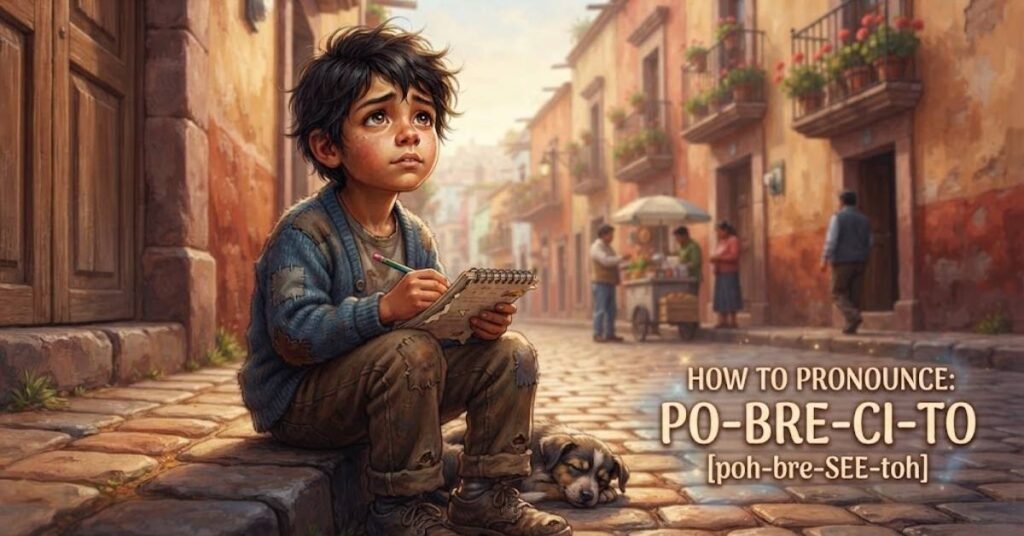
Getting the pobrecito pronunciation right isn’t hard once you break it into chunks. Say it like this: Poh breh SEE toh.
Some guides write it as Po bre ci to, splitting it into four even beats. Either way works, just stress that third syllable a bit harder.
Spanish learners often rush this word. Slow down. Let each syllable land, and you’ll sound far more natural to native Spanish speakers.
When People Use Pobrecito
This word pops up constantly in everyday Spanish. Let’s look at the specific moments where it fits best.
Comforting Someone
When a friend is upset, pobrecito softens the moment. It says “I see you, and I feel for you” without sounding stiff or formal.
You’ll hear it in hospitals, at kitchen tables, over the phone during a tough call. It’s the verbal equivalent of a hand on the shoulder.
Talking About Children

Parents and grandparents say it constantly. A toddler crying over a dropped ice cream cone? That’s a classic pobrecito moment.
It’s gentle, almost like baby talk for grown-up sympathy. Kids hear it and instantly understand someone cares.
Referring to Pets
Injured animals and sick pets get this word a lot too. A dog limping after a fall, a cat stuck in the rain, both qualify.
Veterinary clinics hear this term all day long. Owners say it while stroking their pet’s fur, half comfort, half heartbreak.
Responding to Bad News
Someone lost their job. Someone’s flight got cancelled. Someone’s team lost in overtime. Pobrecito fits all of these unfortunate situations.
It’s a quick, warm reaction, way more human than a formal “I’m sorry to hear that.”
Can Pobrecito Be Sarcastic?
Yes, and this trips up a lot of learners. Pobrecito can flip into irony or teasing depending entirely on tone and context.
Picture a friend complaining about a tiny inconvenience while you’re dealing with real problems. Someone might say “ay, pobrecito” with a raised eyebrow. That’s sarcastic meaning, not sympathy.
Television dramas and romantic movies use this trick often. A character says it sweetly, but the smirk gives away the real message.
So how do you tell the difference? Watch the face. Listen to the pitch. Genuine sympathy sounds soft and slow. Playful meaning sounds sharp, almost clipped.
Different Forms of Pobrecito
Spanish grammar requires agreement, so this word changes shape depending on who you’re talking about.
- Pobrecito: singular, male or general use
- Pobrecita: singular, female
- Pobrecitos: plural, male or mixed group
- Pobrecitas: plural, all female
Mixed group situations default to the masculine plural, pobrecitos, even if most people in the group are women. That’s just how Spanish adjectives work.
Getting the gender agreement right matters. Using pobrecito for a woman sounds off to native Spanish speakers, even if they understand what you meant.
Everyday Examples
Real situations help this word click faster than any definition ever could. Here’s where you’ll actually hear it.
Family
A grandmother watching her grandson fall off his bike says “ay, pobrecito” before rushing over. It’s instinctive, almost reflexive comfort.
School
A teacher notices a student who forgot their lunch. “Pobrecita, she must be starving,” a classmate whispers with genuine concern.
Work
A coworker pulls an all-nighter finishing a report. “Pobrecito, he looks exhausted,” someone mutters near the coffee machine.
Pets
A cat gets soaked in a sudden storm. Its owner scoops it up, saying “pobrecita, you’re freezing,” while grabbing a towel.
Sports
A player misses the winning shot and the crowd groans. “Pobrecito, he had one job,” a fan jokes, half sympathy, half tease.
Examples in Conversations
Seeing this word inside full sentences makes the pattern stick even better. Let’s walk through four quick scenes.
Example One
“Mi hermano se rompió el brazo.” “Ay, pobrecito, ¿cómo pasó?” (My brother broke his arm. Oh, poor thing, how did it happen?)
Example Two
“La perrita perdió a sus dueños.” “Pobrecita, debe estar asustada.” (The little dog lost her owners. Poor thing, she must be scared.)
Example Three
“Juan lloró toda la noche por el examen.” “Pobrecito, estaba muy nervioso.” (Juan cried all night over the exam. Poor guy, he was so nervous.)
Example Four
“¿Otra vez llegaste tarde por el tráfico?” “Ay sí, pobrecito de ti.” (Late again because of traffic?) Here, the tone leans sarcastic, more tease than sympathy.
Similar Spanish Expressions
Pobrecito isn’t the only sympathy phrase in Spanish. A few others carry similar emotional weight.
- Qué pena: what a shame
- Qué lástima: what a pity
- Lo siento: I am sorry
- Ánimo: stay strong
Each phrase does slightly different work. Qué pena and qué lástima react to a situation. Lo siento apologizes or expresses regret. Ánimo pushes someone forward with encouragement.
Pobrecito stands apart because it directs sympathy straight at a person, not just at the event. That personal touch is what makes it so warm.
Common Situations Where You May Hear Pobrecito
You’ll catch this word constantly once you start listening for it. Social media comments under videos of injured animals almost always include it.
Friendly conversations between family members use it daily, often several times before lunch. Spanish speaking communities treat it as second nature, barely thinking twice before saying it.
Even news segments about difficult situations, like a house fire or a lost pet reunited with its owner, might prompt someone watching to mutter it under their breath.
Common Mistakes
Learners stumble on this word in predictable ways. Knowing these traps ahead of time saves you some awkward moments.
Thinking It Always Means Financial Poverty
Pobre alone can point toward money troubles. But pobrecito almost always leans emotional, not financial. Don’t assume someone’s broke just because you heard this word.
Ignoring Tone
Context meaning matters more than the dictionary definition here. Miss the tone, and you’ll misread whether it’s kindness or a joke.
Using the Wrong Gender
Calling a woman pobrecito instead of pobrecita is a small slip, but native ears catch it instantly. Match the female form when needed.
Translating It Word for Word
Literal translation rarely captures the full feeling. “Poor little one” sounds stiff in English, while pobrecito flows naturally in Spanish. Aim for natural translation instead.
Assuming It Is Always Serious
Sometimes it’s just teasing between friends. Not every use carries deep expression of compassion. Read the room first.
Tips for Using Pobrecito Naturally
Want to sound like a native Spanish speaker when you use this word? A few habits go a long way.
- Match your tone of voice to the situation, soft for sympathy, playful for teasing
- Practice the pobrecito pronunciation out loud until it feels smooth
- Pay attention to gender agreement, especially in mixed conversations
- Listen to how Spanish speakers use it in movies and TV Spanish for real examples
- Don’t overuse it. Reserve it for moments that genuinely call for kindness or humor
The Cultural Weight Behind Pobrecito
Spanish speaking cultures tend to express feelings more openly than some English speaking ones. Pobrecito reflects that openness perfectly.
It’s a small word that carries big emotional intent. Saying it out loud, even about a stranger’s bad day, shows a kind of built in empathy many cultures admire.
That’s part of why this term survives across generations and regions. From family conversations at home to comment sections online, it keeps doing the same emotional job it always has.
Conclusion
So, what does pobrecito actually mean? It’s warmth wrapped in four syllables, a way to say “poor thing” that feels personal, not clinical.
Whether you’re comforting a friend, cooing over a soaked kitten, or gently teasing someone about a minor inconvenience, this word flexes to fit the moment.
Master the tone, nail the gender agreement, and you’ll use pobrecito just like a native Spanish speaker would, naturally and without overthinking it.
FAQs
What does pobrecito means in English?
It translates to “poor thing,” “poor little one,” or “poor guy,” depending on context and tone.
Is pobrecito a compliment?
Not exactly. It’s more of a sympathy phrase than a compliment, though it can feel warm and caring when used sincerely.
What is the difference between pobre and pobrecito?
Pobre simply means “poor” and can refer to financial status. Pobrecito adds a diminutive ending that shifts the focus toward emotional sympathy.
Can pobrecito be used for adults?
Absolutely. Adults use it for other adults constantly, especially in casual, caring conversations.
Is pobrecito always sincere?
No. It can be genuinely sympathetic or lightly sarcastic, depending on tone and situation.
What is the female form of pobrecito?
The female form is pobrecita, used for women and girls.
Can I use pobrecito in everyday conversation?
Yes, it fits naturally into daily conversations, from family chats to casual texts with friends.

Muaz is a language enthusiast and content writer at Businessleam, creating clear, helpful articles about words, meanings, grammar, phrases, and modern English.