
You’ve probably seen the word charred on a restaurant menu or in a news headline about a wildfire.But what does it actually mean, and does it change depending on where you see it?In short, charred meaning points to something burned on the surface by intense heat, usually turning black or dark brown.
This article breaks down the definition of charred, how it’s used in cooking, fire damage, woodworking, and everyday speech, plus the mistakes people make when they use the word.By the end, you’ll know exactly when to use it, when to skip it, and why writers reach for it so often.
What Does Charred Mean?
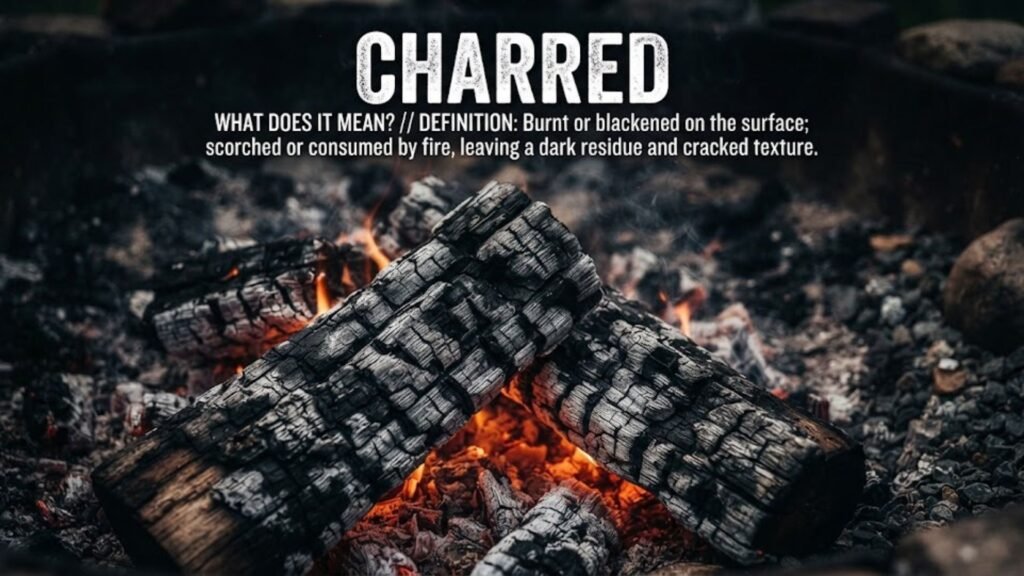
Simple Definition
At its core, charred describes something that’s been burned by heat until its surface turns black, dark brown, or blackened.
Think of the outside of a marshmallow after too long over a campfire. That crusty, dark layer is a textbook case of charring.
The verb char means to burn something partially, turning its outer layer into carbon while the inside often stays untouched.
It’s not the same as saying something is fully destroyed. Charring usually refers to surface damage, not total ruin, and that distinction matters a lot in how the word gets used.
Example Sentences
Here’s how charred shows up in real sentences, across different situations.
- The chef served charred asparagus with a squeeze of lemon.
- Firefighters found charred remains inside the collapsed structure.
- The old fence posts were charred wood, left over from a controlled burn.
- Her notebook had charred edges after the candle tipped over.
Notice how the word adapts to context, whether it’s food, fire damage, or a small household accident. That flexibility is part of why it’s such a useful word for writers.
Charred Meaning in Different Contexts
The word doesn’t carry one fixed mood. In cooking, charred often sounds appetizing, even desirable.
In a news report, the same word can sound grim, describing fire damage to a home or business.
And in design or woodworking, charred wood can be a deliberate, stylish choice rather than an accident.
So context does a lot of heavy lifting here. A charred surface on a steak is a compliment. A charred structure on the evening news is a tragedy. Same word, completely different emotional weight.
Charred vs Similar Words
People often mix up charred vs burned, charred vs scorched, and charred vs carbonized, but there are subtle differences worth knowing.
Burned is the broadest term. It covers anything damaged by fire or heat, mild or severe.
Scorched usually means a lighter surface burn, often without much blackening. Think of a scorched shirt from an iron, not a charred one.
Carbonized goes a step further than charring. It means the material has been converted almost entirely into carbon, often through prolonged or extreme heat exposure.
Roasted and singed are gentler still. Roasting uses controlled heat for flavor, while singeing means a light, quick burn, like eyebrow hairs near a flame.
Here’s a quick breakdown:
| Word | Intensity | Common Use |
| Scorched | Light | Fabric, paper, light cooking |
| Charred | Moderate to heavy | Food, wood, fire damage |
| Carbonized | Heavy | Industrial, extreme heat exposure |
| Singed | Very light | Hair, edges, quick contact with flame |
| Roasted | Controlled | Cooking, not damage |
Knowing these differences helps you pick the right word instead of defaulting to “burned” every time.
How Charred Is Used in Cooking
Common Charred Foods
In the kitchen, charring is often intentional, not accidental. Cooks use open flame or high heat to build flavor on purpose.
Charred vegetables, charred corn, charred peppers, and charred onions are staples at backyard barbecues and upscale restaurants alike.
You’ll also find charred meat, charred steak, charred chicken, and even charred bread, where the crust gets that deep, almost bitter-sweet edge.
Charred corn tacos are a great example. The kernels pick up a smoky char, and that little bit of bitter taste actually balances out the sweetness of the corn.
Example
Picture a grill master flipping corn over an open flame, turning it until the kernels blacken slightly at the edges. That’s controlled blackening, not burning gone wrong.
The goal isn’t to destroy the food. It’s to add smoky flavor, rich aroma, and visual contrast between the golden interior and the darkened crust.
Is Charred Food Burned?
This is where a lot of confusion creeps in. Is charred food safe to eat, or is it basically ruined?
The honest answer is: it depends on how much charring happens. Light charring brings out natural sugars through caramelization, giving food a pleasant, smoky depth.
Excessive burning, on the other hand, tastes bitter and can even raise health concerns if it happens too often or too intensely. So lightly charred food is generally fine, while excessively burned food is where people should pump the brakes.
Charred Objects After a Fire
Away from the kitchen, charred takes on a heavier tone. News reports often describe a charred building, charred house, or charred warehouse after a fire tears through it.
Firefighters and fire investigators use the word constantly, since it accurately describes what’s left once the flames are out. It’s not always total destruction. Sometimes a structure’s frame survives, just covered in charred remains and soot.
Example Sentence
“Investigators sifted through the charred debris, searching for anything that survived the blaze.”
That single sentence tells you a lot: there was fire, there was significant damage, but the scene is still being examined, which means it wasn’t instantly reduced to nothing.
Charred Wood and Modern Design
Here’s something a lot of people don’t expect. Charred wood isn’t always the result of an accident. In fact, it’s a centuries-old technique used on purpose.
The Japanese method known as shou sugi ban involves deliberately burning wood to create a carbonized surface layer. This process boosts weather resistance and insect resistance, while giving the wood a striking, dark textured finish.
Common Uses
Designers and architects now use charred wood siding on homes, fences, and garden structures for both looks and durability.
- Exterior siding with a deep black finish
- Decorative accent walls indoors
- Garden fencing and outdoor furniture
- Custom furniture pieces with a rustic, modern edge
It’s a great example of how something linked to fire damage can also represent craftsmanship and decorative building material choices in modern architecture.
Examples of Charred in Sentences
Cooking Examples
- “The charred cabbage had a smoky bite that paired perfectly with the tangy dressing.”
- “He grilled the burger until the edges were nicely charred, not burnt.”
Fire Related Examples
- “The charred forest stretched for miles after the wildfire finally died down.”
- “Only a few charred vehicles remained in the parking lot after the blaze.”
Everyday Examples
- “The candle left a small charred mark on the wooden table.”
- “Pages of the old book had charred paper edges, brittle to the touch.”
These examples show how naturally the word slides between totally different settings, without ever losing its core meaning.
Common Use Cases for the Word Charred
Food and Recipes
Recipe writers use charred to describe a specific cooking result, one that signals flavor and technique rather than a mistake in the kitchen.
News Reports
Journalists lean on the word to describe fire damage clearly and quickly, without needing long, technical explanations.
Environmental Discussions
Reports on wildfires often mention a charred landscape or charred vegetation, painting a vivid picture of the aftermath for readers who weren’t there.
Construction and Design
In architecture, charred wood gets discussed as a material choice, tied to durability and aesthetic appeal rather than destruction.
Literature and Creative Writing
Fiction writers use charred for vivid descriptions, whether it’s a charred landscape in a post-apocalyptic story or a single charred log left in a dying campfire.
Related Words and Phrases
If you want to avoid repeating charred too often in your own writing, here are some solid alternatives depending on context:
- Blackened for surface color changes
- Scorched for lighter burns
- Singed for quick, minor burns
- Smoked for flavor without heavy blackening
- Toasted for a milder, browned effect
- Fire damaged for structural or property contexts
- Carbonized for extreme, near-total burning
Mixing these in keeps your writing from sounding repetitive while still hitting the same general idea.
Common Mistakes People Make
Assuming Charred Always Means Ruined
Plenty of people assume charred automatically means something is trashed. That’s not accurate. A charred steak is often exactly what the chef intended.
Confusing Charred With Scorched
Charred vs scorched confusion happens a lot. Remember, scorching is lighter and doesn’t always turn the surface fully black, while charring goes deeper and darker.
Thinking Charred Means Completely Destroyed
A charred structure isn’t necessarily gone. It might just have surface damage that’s still repairable, even if it looks dramatic.
Using Burned and Charred Interchangeably
Burned is a general term. Charred describes a specific type of burn result, usually blackened and textured. Swapping them carelessly can blur meaning in your writing.
Assuming All Charred Food Is Unsafe
Not all charred food is unsafe. Intentional charring in cooking is common and generally fine in moderation. It’s excessive, repeated burning that raises real concerns.
Why Writers Use the Word Charred
Writers reach for charred because it does double duty. It’s descriptive, but it’s also efficient, packing a strong visual image into a single word.
Instead of writing “the food had dark, blackened edges from the heat,” a writer can simply say “charred edges” and let readers fill in the sensory detail themselves.
It also carries emotional flexibility. In a food blog, it signals craft and flavor. In a disaster report, it signals loss and urgency. Few words manage that kind of range this efficiently.
Charred in Nature and Wildfire Reporting
Wildfire coverage relies heavily on this word, and for good reason. A charred landscape communicates scale and severity in a way statistics alone can’t quite capture.
Reporters describe charred trees, charred vegetation, and miles of charred landscape to help readers understand the scope of wildfire damage without needing technical fire data.
It’s a word that turns numbers into imagery, which is exactly why environmental journalism leans on it so often.
Conclusion
So, what’s the takeaway here? Charred is a flexible, vivid word that shifts meaning depending on where you find it.In cooking, it usually signals flavor and technique. In fire reporting, it points to real damage, though not always total destruction. In design, it can even represent craftsmanship.
Once you understand these contexts, you’ll never second-guess whether the word fits your sentence. And you’ll probably start noticing it everywhere, from menus to news headlines.
FAQs
What does charred mean?
It means something has been burned on the surface by heat, usually turning black or dark brown.
Is charred the same as burned?
Not exactly. Burned is a general term, while charred specifically describes a blackened, textured result from heat exposure.
Can food be charred on purpose?
Yes, absolutely. Chefs often use intentional charring to add smoky flavor and texture to vegetables, meat, and bread.
Is charred food safe to eat?
Lightly charred food is generally safe and often desirable. Heavily burned food, eaten often, is where concerns start to come in.
What does charred wood mean?
It refers to wood that’s been deliberately or accidentally burned on the surface, often used in design for durability and style.
What is a charred landscape?
It describes an area, usually after a wildfire, where trees and vegetation have been blackened and damaged by fire.
What color is something that is charred?
Typically black, dark brown, or dark gray, depending on how intense the heat exposure was.
Can paper become charred?
Yes. Paper chars easily, often showing charred edges first before the damage spreads further if exposed to flame.

Muaz is a language enthusiast and content writer at Businessleam, creating clear, helpful articles about words, meanings, grammar, phrases, and modern English.