

Ever stared at a word and thought, “Wait, does that look right?” You type it, delete it, and type it again. Then you hope spellcheck will bail you out.Here’s the short version: absence is the correct spelling. Absense is a common misspelling, and no major dictionary accepts it.
Stick around and you’ll learn why the mix-up happens and how to dodge it. You’ll also pick up a few tricks that make the right spelling stick for good.
Absence or Absense – Quick Answer
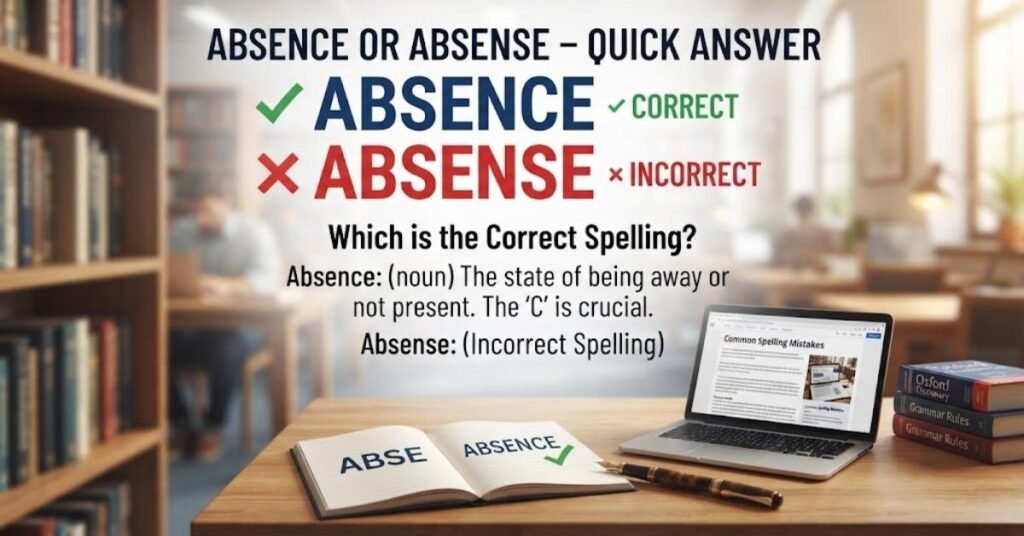
So, how do you spell absence? A-B-S-E-N-C-E. It ends in the -ence ending, not the -sense ending. That settles the absence or absense question.
Every dictionary lists absence as the accepted spelling. Absense gets flagged as a spelling error in Word, Google Docs, and most phone keyboards. If you’ve been wondering is absense wrong, the answer is yes.
Use absence in emails, school essays, and office reports. It keeps your writing accuracy intact and your professional writing clean.
Absence Meaning
Absence is a noun. It means not being present, or the state of being away from a place, person, or duty. Think of it as the flip side of presence.
It’s tied to the adjective absent. If you’re absent from class, your absence goes on the record. The plural form is absences.
Sometimes the word describes a missing thing instead of a missing person. Take absence of evidence or a long absence of rain. The idea stays the same: something is not present.
The Origin of Absence or Absense
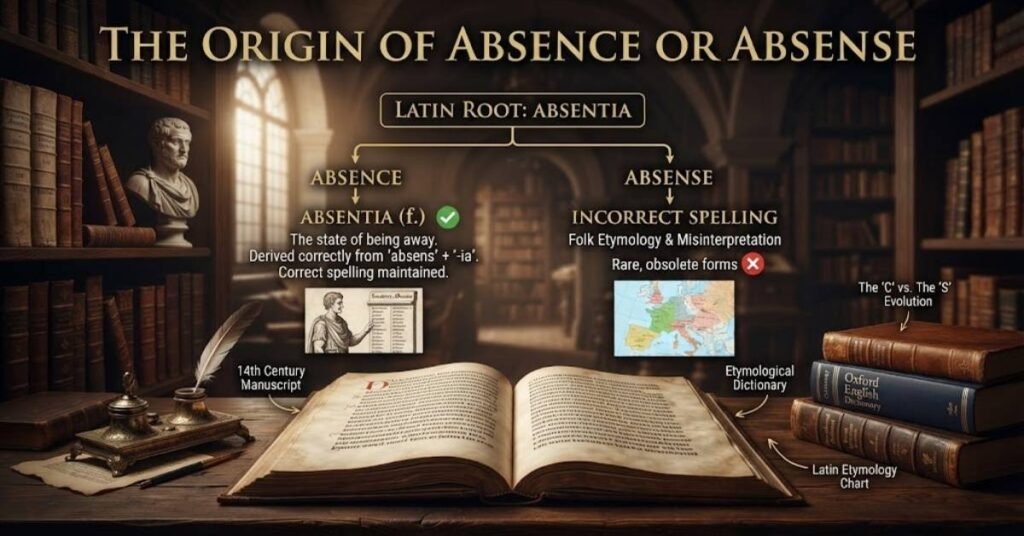
The word origin explains a lot. Absence comes from the Latin word absentia, which grew out of absens, meaning “being away.” Romans used it for someone who wasn’t around.
From there, the word traveled through the French language. Old French gave us absence, and English vocabulary borrowed it in the Middle Ages. The spelling has barely changed since.
That’s why the etymology never includes an “s” sound spelled with an s. The ending comes from the Latin suffix -entia, which became -ence in English. No absense ever existed in the historical root.
British English vs American English Spelling
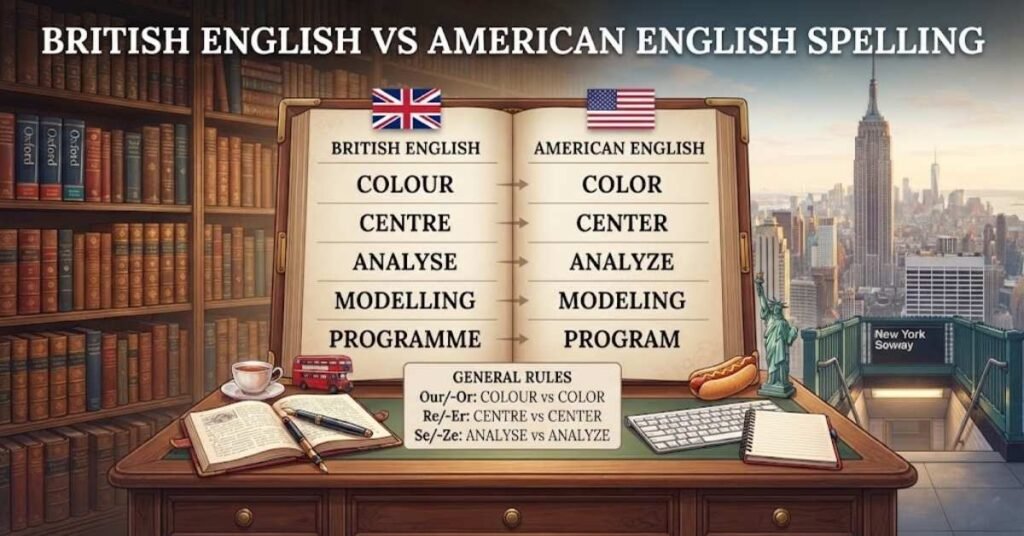
Here’s some good news. British English and American English agree on this one. You won’t find a regional variation for absence.
Compare that with words like colour and color, or centre and center. Those spelling differences are real. Absence isn’t one of them.
The same spelling works in UK English, Commonwealth English, and the US. If someone claims absense is a British thing, they’ve got it wrong. It’s simply a spelling mistake everywhere.
Which Spelling Should You Use?
Always use absence. There’s no situation where absense wins. It doesn’t work in formal writing, and it doesn’t work in casual writing either.
Picture a manager scanning office reports on a Monday morning. One typo in a subject line can make a tidy message look rushed. Correct usage builds credibility without you doing anything extra.
Even a quick school note or a text to a teacher deserves the right form. It takes two seconds to get right. After that, you can stop thinking about it.
Why Is This Mistake So Common?
Blame pronunciation. Say absence out loud, and the last syllable sounds like “sense.” Your brain hears it, then writes what it heard.
That’s the classic case of sounds right but looks wrong. Pronunciation confusion leads to typing mistakes, especially when you’re moving fast. The word sense is so common that your fingers just go there.
Habit plays a part too. Words like nonsense and commonsense reinforce the -sense ending. So the wrong pattern feels familiar, even though absence belongs with a different family.
Common Mistakes with absense vs absence
The absense vs absence slip isn’t the only one. This word attracts several writing mistakes. Here’s a quick list of what people get wrong:
- Absense: the classic swap of “ce” for “se.”
- Abscence: an extra “c” sneaks in after the “s.”
- Absance: the “a” replaces the “e” in the ending.
- Absenses: a wrong plural form. The right one is absences.
Most of these happen because of proofreading skipped or over-trusting autocorrect. Autocorrect errors can also swap in a totally different word. So one lazy glance won’t cut it.
Absence or Absense in Everyday Examples
Real sentences make the rule easier to remember. Here are some examples that use the correct word in common situations:
- Your absence from the meeting was noted by the team.
- Her absence from work lasted three days.
- The absence of evidence left the case open.
- He took leave for an absence due to illness.
- The teacher marked her absence on the register.
- I’m feeling your absence more every day.
- A long absence of rain dried out the fields.
Now imagine a student named Sam writing an email to his professor. He types “sorry for my absense” and hits send. The professor doesn’t fail him, but the typo makes the apology feel sloppy.
Small things add up. In school essays and exams, one spelling error may cost a mark. In business communication, it can dent your image.
Absence or Absense – Google Trends & Usage Data
Want proof that people struggle with this? Look at search behavior. People type queries like is absense wrong and correct spelling of the word into search engines every day.
Try a quick keyword comparison yourself in Google Trends. Enter absence and absense side by side. The correct word dwarfs the misspelling by a wide margin in worldwide usage.
Still, the fact that users searching for the wrong form exist tells a story. It shows real spelling confusion among learners and native speakers alike. Check the live usage data yourself, since numbers shift over time.
Absence vs Absense: Comparison Table
Sometimes a comparison table says it faster than a paragraph. Here’s a side-by-side look at correct vs incorrect forms:
| Feature | Absence | Absense |
| Status | Correct word | Incorrect word |
| Found in dictionaries | Yes | No |
| Word type | Noun | Not a recognized word |
| Ending | -ence ending | -sense ending |
| Plural | Absences | None |
| Works in UK and US | Yes | No |
| Safe for professional writing | Yes | No |
If you only remember one row, remember the status. One is a real word. The other is just a typo that keeps popping up.
Easy Tricks to Remember the Right Spelling
Try this one: take absent, drop the “t,” and add “ce.” You end up with absence. It’s a small swap, but it works every time.
Another trick is to pair it with presence. Both words end in -ence, and both are opposites. Say them together and your brain files them in the same folder.
A third option is to notice the family. Difference, silence, and patience all follow the English noun pattern with -ence. Sense and nonsense are a separate crowd, so keep them out of this one.
How to Catch the Error Before You Hit Send
Don’t lean on spellcheck alone. It catches absense, but it can’t judge whether the word fits your sentence. Treat it like a smoke alarm, not a firefighter.
Read your draft out loud, or read it backward. This slows your eyes down and helps you spot typing mistakes. Good proofreading skills save you from embarrassing writing mistakes.
For social media posts, news updates, and online content, take an extra ten seconds. A quick scan boosts writing clarity, and it shows respect for your reader. Your confidence grows too when you know the text is clean.
Conclusion
Absence is the only correct English spelling here. Absense is a spelling mistake born from pronunciation and fast typing. Now you know the origin, the meaning, and the tricks to avoid it.Good writing skills grow through small habits like this one. Proofread, pair the word with presence, and don’t blindly trust autocorrect. Your professionalism will show.
Did this clear things up? Drop a comment with the trickiest word you always misspell. And if a friend keeps writing absense, share this post with them.
FAQs
Is absense a word?
No. Absense isn’t a recognized word in any standard dictionary. It’s an incorrect spelling of absence.
How do you spell absence correctly?
The correct spelling is A-B-S-E-N-C-E. It ends in -ence. Remember the trick of dropping the “t” from absent and adding “ce.”
Is absence spelled differently in British and American English?
No. British English and American English use the same spelling. There’s no regional spelling difference for this word.
Why do people write absense instead of absence?
Mostly because of pronunciation confusion. The ending sounds like sense, so the wrong spelling feels natural. Fast typing and trusting spellcheck add to the problem.
What’s the plural of absence?
The plural form is absences. For example, “Three absences in one month can affect your grade.”

Muaz is a language enthusiast and content writer at Businessleam, creating clear, helpful articles about words, meanings, grammar, phrases, and modern English.