
Ever typed a name, hit send, and then spotted the typo? It happens fast, and this name trips people up more than you’d think.Wondering if you should write Issac or Isaac in that email? Or maybe you’re filling out a school form and don’t want to look careless.
The correct spelling is Isaac.You’ll see it in the Bible, in science books, and on official documents.This guide walks you through why that’s true. You’ll also get simple tricks so you never mix it up again.
Issac or Isaac – Quick Answer
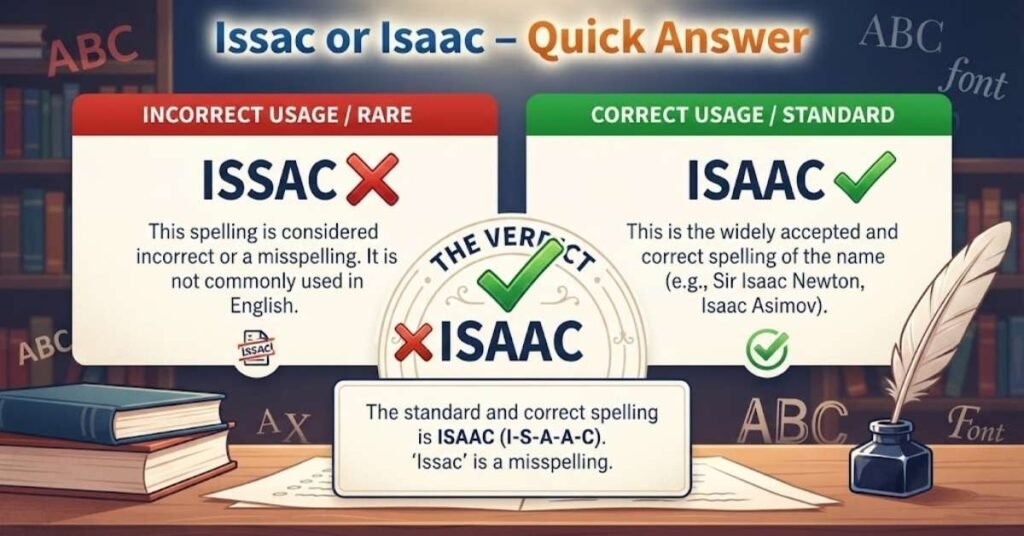
Isaac is the standard spelling in every major English speaking country.
Issac is an incorrect form, and it counts as a common spelling error.
Look at the I-S-A-A-C pattern.
It has two a letters side by side, and only one s.
Most mistakes come from doubling the wrong letter.
Your brain wants “ss” because it looks familiar, but the name doesn’t work that way.
Here’s the short version for busy readers:
- Correct: Isaac
- Incorrect: Issac
- Rule: One s, two a’s
The Origin of Isaac
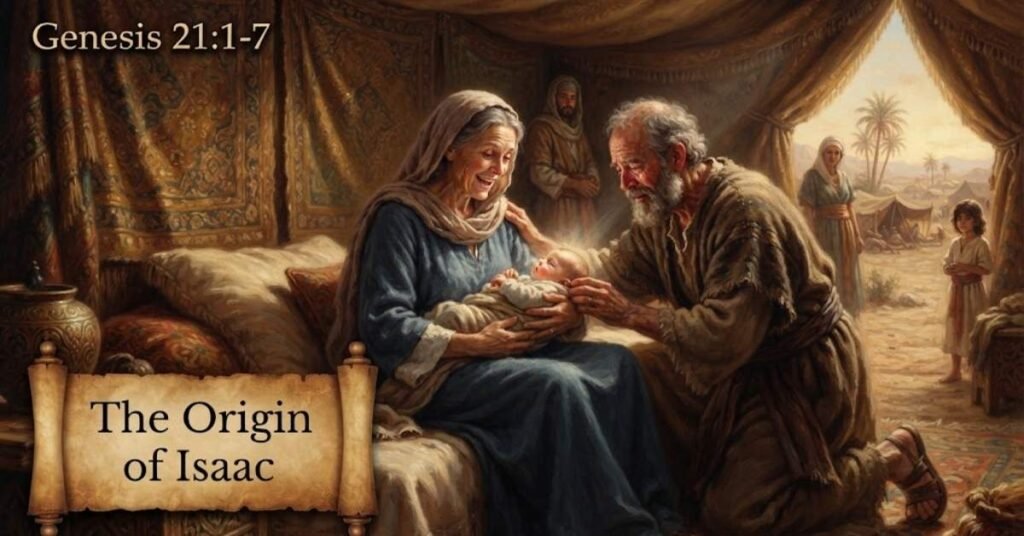
Isaac is a male given name with Hebrew origin.
It comes from the Hebrew name Yitzhak, sometimes written Yitzchak.
The meaning of Isaac is “he will laugh.”
That laughter goes back to a famous story about Sarah and her surprise pregnancy.
It’s a biblical name.
The Bible describes Isaac as the son of Abraham, and his name shows up throughout the religious texts of Judaism, Christianity, and Islam.
The name then traveled through the Greek language, where it became Isaak.
The Latin language turned it into Isaac, and English adopted that Latin form.
That’s why this historical name still looks the same today.
It’s an ancient name with a centuries-old spelling, and it barely changed along the way.
British English vs American English Spelling
Some words change between countries.
Think “colour” versus “color” or “centre” versus “center.”
Good news: names like Isaac don’t follow those rules.
British English, American English, and Commonwealth English all use the same English spelling.
So there’s no UK English version and no US English version.
Whether you write for a London paper or a Texas school, it’s Isaac.
This makes your life easier.
You don’t need to switch settings in your spell checker when you type this name.
Which Spelling Should You Use?
Use Isaac.
There’s no situation where Issac is the safe pick.
Names are personal, though.
A few people do carry unusual spellings, so if someone tells you their name is Issac, follow their lead.
That’s about respect and personal identity, not grammar.
When you don’t know, stick with the accepted spelling and check with the person if you can.
For different audiences:
Your reader changes how careful you need to be.
Here’s a simple way to think about it.
- Teachers and professors: Use Isaac every time. School assignments with a typo in a famous name can cost you marks.
- Employers and clients: Spell it right in professional communication. Small slips can make people doubt your care.
- Friends and family: Fast texts are forgiving, but the correct form still looks better.
- Someone named Issac: Match their spelling exactly, since it’s their personal name.
Common Mistakes with Issac or Isaac
The biggest slip is Issac.
It’s a classic case of swapped letters, where the s and a trade places in your head.
Here are the other name variants you’ll run into:
- Isac: One a goes missing. This is a genuine spelling in some languages, but it’s not the English one.
- Isaak: A real form in German, Dutch, and Russian contexts. It’s fine there, but not in English.
- Issaac or Isaacc: Extra letters sneak in from fast typing mistakes.
Why does this keep happening?
Your fingers move quicker than your eyes, and the letter order in this name feels unusual.
Picture a manager writing a welcome email to a new hire.
She types “Welcome, Issac!” and only spots it after the whole team replies. Awkward, right?
Isaac in Everyday Examples
Real life shows you where this matters most.
Let’s walk through the places you’ll actually write this name.
Emails
Emails are where spelling mistakes hurt the most.
Someone’s name in the greeting sets the tone for everything after it.
Before you hit send, glance at the name once.
That single second of proofreading protects your correct usage and your reputation.
Say you’re writing to a client called Isaac Morgan.
Copy the name from his signature instead of typing it from memory.
News
News writing lives on accuracy.
A wrong name in a headline can spread across hundreds of shares before anyone fixes it.
Editors check names against the standard spelling for this reason.
Reporters often confirm the spelling directly with the person they’re quoting.
Think of a local story about a young athlete named Isaac.
Getting his name right shows the paper respects him and its readers.
Social Media
Social posts feel casual.
Still, people notice when a name is wrong, especially if it’s theirs.
A birthday tag with “Issac” might get a laughing emoji back.
It can also feel a little careless, particularly on public posts.
Handles and usernames are different.
Those are chosen by the account owner, so copy them exactly as shown.
Academic Writing
Academic writing rewards precision.
When you cite Isaac Newton, the spelling must match the source.
A typo in a reference list can mislead readers.
It can also cause search tools to miss the paper you’re citing.
Try this habit before you submit.
Search your document for “Issac” and fix every match.
Formal Writing
Formal writing and official documents demand extra care.
Think passports, contracts, job applications, and legal forms.
A misspelled name can trigger delays.
Sometimes it means paperwork gets rejected and you have to start over.
Always match the spelling on a person’s government ID.
That protects name accuracy and saves everyone a headache.
Issac or Isaac – Google Trends & Usage Data
People search this topic more often than you’d expect.
A quick look at Google Trends can show you how interest rises and falls.
I don’t want to invent numbers for you.
So open Google Trends yourself, type both spellings, and compare the lines side by side.
Expect “Isaac” to dominate by a wide margin.
The misspelling tends to appear as a smaller, steady stream of keyword search activity.
Why people search this keyword:
Most searches come from doubt, not curiosity.
People want quick spelling verification before they hit send.
Here are the usual reasons:
- They’re naming a baby or writing a birth announcement.
- They’re finishing a school project about a scientist.
- They’re typing a name at work and feel unsure.
- They just noticed the search confusion caused by autocorrect.
Popular regions:
English speaking countries drive most of this interest.
That usually includes the United States, the United Kingdom, India, and Pakistan.
Those regions have huge student and professional populations.
Lots of people write English as a second or third language there, so quick checks make sense.
Trends shift by year and season.
School terms and exam months often bring small bumps, so check current data for your own market.
Usage contexts:
Different settings produce different searches.
Here’s how they usually break down.
- Education: Students checking names for essays.
- Workplace: Employees confirming spelling in emails.
- Parenting: Families comparing name options.
- Casual use: People settling a friendly argument.
Comparison Table (Keyword Variations)
Here’s a quick side by side view of the spellings you might meet.
It shows which ones work and which ones don’t.
| Spelling | Status | Where it’s used | Should you use it? |
| Isaac | Standard | All English speaking countries | Yes, always |
| Issac | Incorrect | Typos and mistakes | No |
| Isac | Variant spelling | Some other languages | Only if a person uses it |
| Isaak | Variant spelling | German, Dutch, Russian contexts | Only in those contexts |
| Issaac | Incorrect | Typing errors | No |
Notice how only one row earns a firm yes.
The others are either rare spelling choices or plain mistakes.
Why Your Brain Swaps the Letters
This mistake isn’t about being bad at spelling.
It’s about how your brain reads and predicts words.
You see the first and last letters clearly.
The middle gets filled in from patterns you already know, and “ss” is a very common pair in English.
Words like “passage,” “message,” and “classic” all carry double s.
So your brain reaches for that habit and gives you Issac.
Knowing this helps you catch it.
Slow down on the middle of the name and you’ll fix most slips.
Famous Isaacs You Already Know
Real people make spelling stick.
Once you connect the name to a face, it’s harder to forget.
Isaac Newton is the big one.
The famous scientist worked out the laws of motion and gave us the story of the falling apple.
Then there’s Isaac Asimov, the science fiction author.
Musician Isaac Hayes also carried the name, and a quick search will show it spelled the same way every time.
Every one of these people uses Isaac.
If you’re ever unsure, search their name and compare.
Simple Ways to Remember the Spelling
Here’s the good part.
You don’t need fancy tricks, just one or two simple hooks.
Try these:
- Two a’s, one s: Say it out loud while you type.
- Newton test: Picture Isaac Newton’s name on a science textbook.
- Twin a’s: The two a’s stand together like brothers, and the s sits alone.
- Spell it out: I, S, A, A, C. Repeat that once and it sticks.
Build the habit through proofreading skills.
Reread names first, before you check anything else in a draft.
A little attention to detail pays off fast.
Correct names signal care, and people remember that.
Conclusion
The answer is simple. Isaac is right, and Issac is a spelling mistake.You’ve now seen the Hebrew name roots, the Yitzhak connection, and the meaning “he will laugh.” You also know how UK and US writers treat the name, and why swapped letters cause trouble.
Next time you type it, pause for one second. That tiny check keeps your emails, essays, and posts clean.Got a spelling that always trips you up? Drop it in the comments, and share this guide with a friend who keeps mixing these two up.
FAQs
1. Is “Issac” ever correct?
Not in standard English. It’s a common spelling error for Isaac.A few individuals do use it as a personal choice. If someone you know spells it that way, respect it.
2. What is the correct spelling?
The correct spelling is Isaac. Remember the two a letters and single s.
3. Why do people write “Issac”?
Mostly because of typing errors and habit. The double s pattern feels natural, so the brain swaps letters without asking.
4. Is “Isaac” used worldwide?
It’s very widely used, especially in English speaking places. Other languages have their own forms, such as Isaak or Isac, but English sticks with Isaac.That’s part of its global usage. The name has crossed borders for centuries-old reasons tied to religion and culture.
5. Does spelling change in UK or US English?
No. Both British English and American English use Isaac.
6. Who is a famous Isaac?
Isaac Newton is the most famous, thanks to his work on gravity and the laws of motion. Isaac Asimov and Isaac Hayes are two more well known names.
7. How can I remember the spelling?
Think “two a’s, one s.” Picture Newton’s name on a textbook and spell it out loud once.

Muaz is a language enthusiast and content writer at Businessleam, creating clear, helpful articles about words, meanings, grammar, phrases, and modern English.